
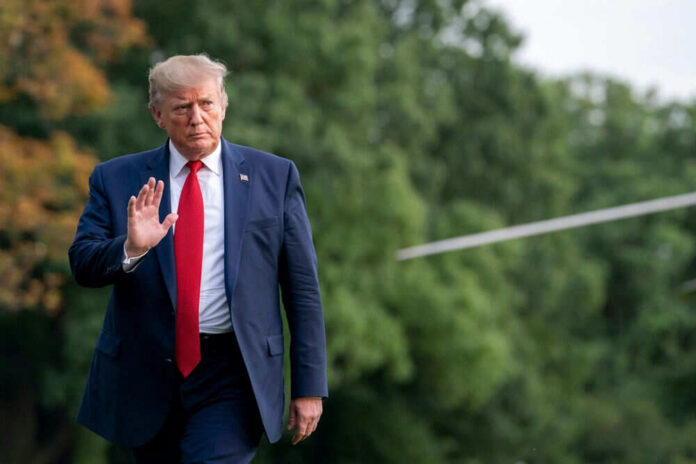
(DailyAnswer.org) – President Trump is demanding Congress double its defense aid to Taiwan to $1 billion, leaving the political arena buzzing with debates and diplomatic tensions hanging thick in the air.
At a Glance
- President Trump pushes for $1 billion in defense aid to Taiwan amidst rising tensions with China.
- The House of Representatives passed a bill allocating $500 million, half of what Trump is demanding.
- The debate highlights divisions within Congress over foreign aid and fiscal responsibility.
- China remains firmly opposed to U.S. military support for Taiwan, viewing it as interference.
Trump’s Bold Move on Taiwan Defense
President Donald Trump has thrown the gauntlet down, urging Congress to double the proposed defense aid for Taiwan from $500 million to a staggering $1 billion for fiscal 2026. This move comes amidst escalating military tensions with China, which continues its aggressive posturing towards Taiwan. Trump’s administration argues that the increased aid is not only vital for Taiwan’s defense but also crucial for maintaining peace and stability in the Indo-Pacific region.
The U.S. House of Representatives recently passed a defense appropriations bill, which included $500 million for the Taiwan Security Cooperation Initiative. However, Trump’s insistence on doubling this amount has sparked a significant debate in Washington. Some lawmakers, particularly those with fiscal conservative views, express concerns over the increased foreign aid expenditure amid domestic financial constraints. They argue that Taiwan should shoulder more responsibility for its own defense, echoing Trump’s previous calls for allies to contribute more significantly to their security.
China’s Stance and U.S. Strategic Interests
China’s reaction to U.S. military support for Taiwan is predictably hostile. Beijing views Taiwan as a breakaway province and has not ruled out the use of force to achieve unification. The call for increased military aid is likely to exacerbate already strained U.S.-China relations. China has consistently condemned U.S. arms sales and military aid to Taiwan as meddling in its internal affairs and has responded with both diplomatic protests and military maneuvers.
Despite the risks of escalating tensions, Taiwan’s strategic importance cannot be overstated. The island is a critical player in global semiconductor manufacturing and serves as a key U.S. partner in the region. Strengthening Taiwan’s defenses is seen by many as essential to deterring Chinese aggression and maintaining a balance of power in the Indo-Pacific. However, this approach also risks fueling an arms race and increasing instability in the region.
Congressional Debate and Political Implications
The push for increased aid to Taiwan has led to a heated debate in Congress. Some Republicans, like Rep. Marjorie Taylor Greene, have voiced opposition to the aid increase, citing fiscal concerns and the potential for Taiwan to become overly reliant on U.S. support. Meanwhile, other lawmakers, including several Democrats, argue that robust aid is necessary to counter growing Chinese threats and ensure regional stability.
This divide highlights broader questions about U.S. foreign policy priorities and the role of military aid. It also reflects ongoing tensions within the Republican Party, between those who favor a more isolationist approach and those who believe in maintaining strong international alliances to counter global threats. The outcome of this debate will have significant implications not only for U.S.-Taiwan relations but also for the broader geopolitical landscape in the Indo-Pacific.
Copyright 2025, DailyAnswer.org