
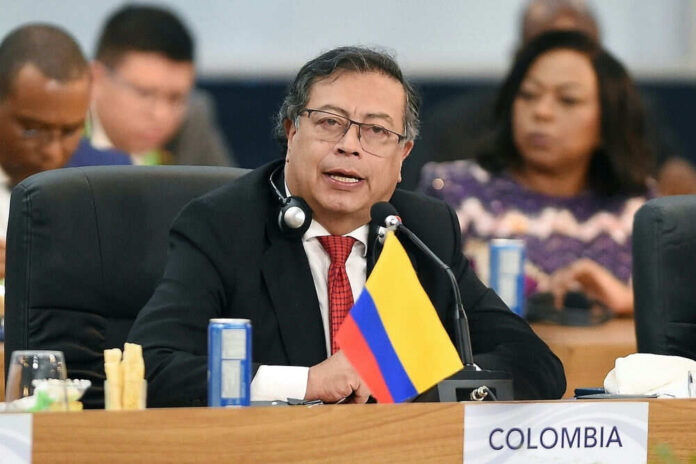
(DailyAnswer.org) – A single presidential tweet detonated decades of diplomacy, as Donald Trump branded Colombia’s leader Gustavo Petro an “illegal drug leader” and yanked every dollar of U.S. aid, raising a dangerous question: what happens when the world’s drug war alliance collapses overnight?
Story Snapshot
- Trump suspended all U.S. aid to Colombia, directly accusing President Petro of fueling cocaine production.
- U.S.-Colombia relations hit historic lows after deadly military strikes and public accusations.
- Colombia retaliated by halting U.S. arms purchases and condemning American intervention.
- Analysts warn that aid cuts could embolden criminal networks and shift regional power.
The Day the Alliance Broke
On October 19, 2025, President Trump delivered a message that reverberated far beyond Washington: every cent of U.S. aid to Colombia was finished, effective immediately. The decision followed a week of escalating tension that began with U.S. military strikes on suspected drug-trafficking vessels in Caribbean waters. When one of those strikes killed a Colombian fisherman, President Petro fired back, condemning the U.S. for violating Colombian sovereignty and labeling Trump complicit in “genocide.” The diplomatic fuse was already lit; Trump’s public attack turned it into an explosion.
Colombia responded by freezing all U.S. arms purchases and calling for criminal investigations into the civilian casualties. The U.S. Department of Defense, meanwhile, justified the strikes as necessary to disrupt narco-terrorist networks, specifically the ELN rebel group. For decades, Colombia had been a keystone in the U.S. war on drugs, receiving billions in aid and military support. Overnight, that foundation crumbled, replaced by mutual distrust and public accusation.
Root Causes and Rising Tensions
Years of simmering disagreement preceded the breakdown. Gustavo Petro, once a guerrilla himself, took office in 2022 promising to reform Colombia’s approach to drug trafficking. He shifted focus from forced eradication to addressing the social roots of coca cultivation, arguing that poverty and demand, not crackdown, drove the trade. The result: a 70% surge in coca crops, with UN and Colombian government figures confirming record highs. U.S. officials grew increasingly wary, culminating in September 2025’s dramatic decertification of Colombia as a drug war ally and the revocation of Petro’s U.S. visa after a pro-Palestinian rally speech.
Military cooperation frayed as the U.S. ramped up maritime interdiction, leading to the controversial strikes that killed a civilian. Petro’s government condemned the actions, while Trump seized the opportunity to publicly blame Petro for the cocaine boom. Trump’s approach, tying foreign aid directly to drug war benchmarks and military incidents, marked a sharp departure from past administrations, who threatened but rarely enacted such drastic measures.
Unprecedented Fallout: Short and Long-Term Impacts
The immediate fallout from the aid suspension is severe. Colombian security forces, long reliant on American funding and equipment, now face budgetary shortfalls and operational challenges. Rural communities, often caught between government forces and drug traffickers, lose critical support programs. The diplomatic rupture has triggered political polarization in both countries, with Petro’s leftist government asserting sovereignty and Trump’s administration touting toughness on drugs.
Long-term consequences loom large. Analysts warn that the absence of U.S. aid could weaken Colombia’s capacity to combat drug trafficking, giving criminal organizations room to expand. The precedent set by Trump, tying aid to political and military disputes, may reshape how America engages with regional partners. Colombia’s foreign policy could pivot, seeking new alliances and international support to replace the lost American lifeline. For Latin America, the episode raises alarms about the stability of U.S. influence and the future of counternarcotics cooperation.
Expert Perspectives: The Divide Over Blame and Solutions
Industry experts and drug policy analysts view Trump’s “illegal drug leader” accusation as not only unprecedented, but also highly risky. While U.S. officials frame the aid cut as necessary leverage, Colombian leaders and many international observers see it as punitive and counterproductive. United Nations and Colombian government data confirm the surge in coca cultivation, yet explanations diverge: U.S. sources blame Petro’s policies, while Petro points to global demand and the legacy of failed crackdowns.
Scholars caution that severing aid could undermine both U.S. and Colombian interests, potentially emboldening rebel groups and traffickers. Human rights advocates criticize the lack of transparency in U.S. military operations and highlight the civilian toll. The dispute over the identity of those killed in the strikes, narco-terrorists according to the U.S., innocent fishermen according to Colombia, captures the chaotic uncertainty now defining bilateral relations. The open question remains: can either country afford the cost of a broken alliance?
Copyright 2025, DailyAnswer.org