

(DailyAnswer.org) – A Florida spearfisherman’s quick thinking and medical instincts saved his life when a 6-foot reef shark attacked him in remote Bahamas waters, proving that survival often depends on individual preparedness rather than government rescue services.
Story Highlights
- Eddie Jarmakowicz instinctively elevated his mangled hand above water to control bleeding after shark attack
- Remote Bahamas clinic provided minimal care, highlighting dangers of relying on limited government healthcare
- Advanced Florida hospital surgery repaired eight severed tendons through microscopic procedures
- Self-reliance and quick decision-making proved more valuable than waiting for outside help
Shark Strikes During Routine Spearfishing Trip
Eddie Jarmakowicz, a 53-year-old medical sales worker from Riviera Beach, Florida, was spearfishing in 20-25 feet of water off Grand Cay, Bahamas on August 16, 2025, when disaster struck. As he ascended with a freshly speared mutton snapper, a 6-foot reef shark clamped down on his left hand and forearm. The attack happened so quickly that Jarmakowicz never saw the predator approach, though his dive buddy witnessed the “torpedo-like” strike that would forever change the experienced fisherman’s life.
The shark’s powerful jaws severed eight tendons in Jarmakowicz’s hand, creating a life-threatening injury in one of the most remote locations imaginable. Grand Cay, with a population of only 250 people, offered minimal medical infrastructure for such a severe trauma. This incident underscores the critical importance of self-reliance when pursuing outdoor activities, especially in areas where government services remain virtually nonexistent.
Life-Saving Instincts Trump Government Healthcare
Jarmakowicz’s medical background immediately kicked in as he fought for survival. He instinctively held his mangled hand above the waterline to minimize blood loss while swimming the crucial 10 feet back to his boat, the Square Grouper. His dive buddy alerted the crew, who quickly wrapped the wound and began the 45-minute boat ride to Grand Cay’s shore. These split-second decisions and self-administered first aid proved far more valuable than any government emergency response could have provided in such a remote location.
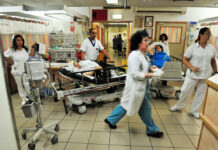
The local clinic on Grand Cay exemplified the limitations of government-funded healthcare in remote areas. Staff could only provide basic antibiotics and wound wrapping, with no pain medication or advanced treatment available. This stark reality highlights why Americans should never rely solely on government healthcare systems, particularly when venturing into areas where bureaucratic inefficiency meets geographical challenges. Jarmakowicz’s survival depended entirely on private transportation and his own quick thinking.
Advanced Private Healthcare Delivers Results
A local pilot flew Jarmakowicz to Florida, where a medical helicopter transported him to HCA Florida Lawnwood Hospital. Trauma surgeon Dr. Aleta Paschal immediately assessed his vascular stability, while Dr. David Rubay, the trauma medical director, performed microscopic surgery to repair the eight severed tendons. This level of advanced care, available through private healthcare facilities, stands in stark contrast to the limited government clinic that could barely address his basic needs.
The surgical team’s expertise and advanced equipment enabled complex tendon repair that will restore movement and sensation to Jarmakowicz’s hand. Dr. Paschal emphasized that timely intervention was crucial for saving the limb, while Dr. Rubay noted the sophisticated microscopic techniques required for such repairs. This successful outcome demonstrates how private healthcare innovation and competition drive the medical excellence that government systems consistently fail to deliver.
Personal Responsibility Prevents Future Attacks
Rather than demanding government intervention or shark culling programs, Jarmakowicz took personal responsibility for the incident. He admitted to letting his guard down and now warns fellow spearfishers to “always look down for sharks.” His planned return to spearfishing reflects the conservative principle that individuals should not abandon their freedoms due to isolated incidents. This personal accountability mindset contrasts sharply with the typical liberal response of demanding new regulations and government oversight following such events.
As of September 2025, Jarmakowicz continues his recovery with gratitude for the medical team and no bitterness toward the shark or the sport he loves. His story serves as a powerful reminder that self-reliance, quick thinking, and personal responsibility remain the best tools for survival in dangerous situations. Government rescue services, while occasionally helpful, cannot replace the individual preparedness and decision-making skills that ultimately saved his life in those critical moments after the attack.
Copyright 2025, DailyAnswer.org