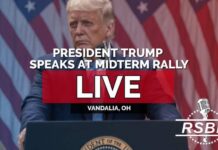

Trump’s new mail-voting order has set off a fight over election control, fraud claims, and federal power.
Quick Take
- The White House says the order is meant to verify citizenship before mail ballots go out.[3]
- The Postal Service would only send mail ballots to voters on approved state lists.[3]
- Critics say the plan could block eligible voters and overstep state election authority.
- Courts have already been asked to halt the order, but one judge let it move ahead for now.
What Trump’s Order Does
President Donald Trump signed the order to tighten mail-in voting rules and build voter eligibility lists. Reporting says the Department of Homeland Security, working with the Social Security Administration, would compile state-by-state lists of confirmed adult U.S. citizens.[3] The Postal Service would then be told not to deliver absentee or mail ballots to people missing from a state-approved list.[3] Supporters call that a basic integrity check.[3]
The order also goes beyond simple paperwork. Coverage says it authorizes investigations, possible prosecution of election officials, and threats to withhold federal money from states that do not comply. The White House and allied coverage frame the move as a defense of honest elections, not an efficiency fix.[3] Trump said the goal was “voter integrity” and “honest voting,” which shows the administration is selling the order as a fraud-fighting measure.[7]
Why Democrats and Voting Groups Are Fighting It
Opponents say the order turns the federal government into a gatekeeper for mail ballots. The American Civil Liberties Union says the Constitution leaves election rules to the states and Congress, not the president. The American Association of People with Disabilities warns the order could cause mass disenfranchisement if federal data are wrong or incomplete. Those concerns matter because the reporting already says the matching system depends on federal records that may contain errors.
Several outlets also note that the order arrives in the middle of an ongoing battle over mail voting and before the midterms. That timing helps explain why critics see a political motive behind the policy. Trump has long attacked mail voting, and news coverage says the new order rests on his old fraud claims even though widespread mail-ballot fraud has not been shown in the record provided.[5] That gap leaves the need for such a broad federal fix open to question.
Where the Legal Fight Stands
Courts have not given the White House a full green light, but they have not stopped the fight either. One federal judge rejected an immediate block because the administration had not yet created bad citizenship lists or issued final Postal Service rules. Other lawsuits argue the policy is unconstitutional and would let a federal mail carrier decide who gets a ballot. The Postal Service has already issued a proposed rule tied to the order, but it would not apply to primary elections or overseas ballots.
The biggest practical issue may be whether federal databases can do the job cleanly. Sources say the plan depends on matching state voter files with federal records, yet those records can be incomplete or outdated. If the lists miss legitimate voters, the result could be rejected ballots, confusion, and more court battles. If the lists are accurate, supporters will argue the order finally adds a hard check against weak mail-ballot controls. Right now, the system is still being tested in court.
Sources:
[3] Web – Trump signs absentee/mail-in voting executive order
[5] Web – Trump signs executive order aiming to restrict mail-in voting, a move …
[7] Web – Trump’s Order Restricting Mail-In Voting Rebuked by States
© dailyanswer.org 2026. All rights reserved.