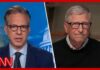

A televised fact check showed Abdul El-Sayed did say “Yes, absolutely” when asked to disavow the Muslim Brotherhood, undercutting a core claim in a heated campaign clash.
Story Highlights
- Town hall video shows El-Sayed disavowed the Muslim Brotherhood when asked directly.
- Mike Rogers denied calling El-Sayed a terrorist and framed his concern as ideological and familial.
- CNN’s Dana Bash pressed Rogers with the recorded “Yes, absolutely” response from El-Sayed.
- Evidence for alleged family ties and a five-country “ban” remains unclear in the record.
What the video and transcript actually show
CNN published video from an October 17 Caro, Michigan, town hall where an attendee asked El-Sayed to disavow the Muslim Brotherhood. El-Sayed answered, “Sure. Yes, absolutely,” and pushed back on the idea that being Muslim implies “dual loyalty” over the United States Constitution. The next day on CNN, host Dana Bash cited that clip while challenging Mike Rogers’s statement that El-Sayed had not meaningfully disavowed the group. The network’s coverage also labeled El-Sayed’s answer a disavowal.
During the October 18 interview, Rogers said he never called El-Sayed a terrorist and argued his concern was about ideology and alleged family connections to the Muslim Brotherhood, not religion. He also said the group is banned in five Muslim countries. The transcript contains no list or citations for that claim, and it does not identify the family member or any record proving a tie. The on-air facts therefore confirm the disavowal but leave the tie claims unverified.
How campaigns turn a clip into a narrative
The exchange spread fast through short clips and partisan captions. Supporters on both sides highlighted the moments that fit their case. Some posts framed the challenge as proof of extremism; others framed it as religious bias. This is the new campaign playbook: press a hot-button question, grab the sharpest ten seconds, and let the algorithm do the rest. That cycle often rewards heat over proof and leaves voters to sort rumor from record.
Both conservatives and liberals see a pattern here. Voters worry that media and political pros pick winners with editing choices and loaded frames. They also worry that real vetting gets replaced by vibe checks and innuendo. In this case, a clear on-camera answer exists, yet the dispute still centers on what counts as a “meaningful” disavowal. That gray area is where trust erodes, and where many believe the “elites” manage perception more than facts.
What remains unproven and why it matters
Rogers’s claim that the Muslim Brotherhood is banned in five Muslim countries is specific and testable, but the interview offered no list or sources. Without that detail, the public cannot check the dates, laws, or whether “ban” means formal outlawing or something else. Similarly, alleged family ties to the organization were named as a concern but were not backed by names, documents, or records in the cited material. That gap leaves voters with questions.
Mike Rogers calls out Abdul El Sayed's links to terrorists & Sharia, but CNN's Dana Bash quickly pivots to Trump
When facts come up,she panics & deflects—clearly DNC aligned
"El Sayed has long supported Muslim Brotherhood, which harms women's rights" pic.twitter.com/gVpPKcWR8y
— Sandy (@SD73660) October 19, 2026
For citizens who want answers, the next steps are simple and fair. First, confirm the full, unedited Caro town hall and compare it with the short clips. Second, ask the Rogers campaign to release the documents behind the family and country-ban claims. Third, review El-Sayed’s public record for any direct statements on the Muslim Brotherhood beyond the town hall reply. Clear sourcing would serve everyone and reduce the space for spin.
Sources:
© dailyanswer.org 2026. All rights reserved.