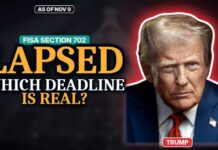

House leaders shut down a rare impeachment bid over war powers, reviving the old fight about who sends Americans into harm’s way.
Story Snapshot
- Rep. Thomas Massie filed eight impeachment articles against Defense Secretary Pete Hegseth, centered on alleged Iran hostilities without Congress’s approval.
- The House voted 211–204 to send the resolution to the Judiciary Committee, stalling the effort for now.
- Three articles cite the War Powers Resolution’s 60-day clock and Congress’s authority to declare war.
- Northern Kentucky voters split over Massie’s motives, reflecting a national trust gap with Washington.
What Massie Filed And Why It Matters
Rep. Thomas Massie introduced a 34-page resolution with eight impeachment articles against Defense Secretary Pete Hegseth on November 9, 2026. The filing accuses Hegseth of “high crimes and misdemeanors” tied mainly to alleged military action against Iran without Congress’s approval. The package cites the Constitution’s grant to Congress to declare war and the War Powers Resolution’s 60-day limit on hostilities without authorization. The case also mentions alleged issues in other regions and civilian harm claims.
Several articles focus on whether the Pentagon continued hostilities after any legal clock ran out. The filing asserts that no declaration of war or specific authorization covered the Iran actions and that hostilities continued anyway. That argument rests on well-known law but depends on timelines, classified orders, and legal advice that are not public. The documents cited in reports highlight a direct test: did Congress approve, and when did the clock start and stop?
How The House Stopped The Push
The House did not vote on guilt or innocence. Instead, lawmakers voted 211–204 to refer Massie’s resolution to the Judiciary Committee. That move shelved the case and blocked immediate hearings or subpoenas. Reporters described the referral as effectively killing the effort for now, because leadership controls the committee calendar. Without hearings, the public record remains thin, and the legal questions remain open for future oversight fights.
Defense Secretary Hegseth and allies dismissed the impeachment as a personal vendetta. They linked it to Massie’s primary loss and past clashes with party leaders. Supporters of Hegseth framed the filing as a distraction from voter concerns such as prices and jobs. These claims speak to motive, not the war powers details. The House action means none of those disputes will be tested soon in sworn testimony or document releases.
Why War Powers Keep Coming Back
For decades, presidents from both parties have stretched their power to use force without clear votes from Congress. The War Powers Resolution tried to pull that power back to the people’s branch. It sets a 60-day limit for hostilities without approval, with a short extension for withdrawal. Congress often argues that the law applies. The executive branch often argues that it does not in a given case or that operations fall below the “hostilities” threshold.
Massie’s filing lands in that long fight. If his timeline is right and operations in Iran continued without approval, then the dispute is squarely inside the War Powers framework. If the Pentagon had legal grounds, or if the actions never counted as “hostilities,” then impeachment would overreach. The problem is access. The key facts live in classified orders, legal memos, and intelligence that Congress did not air before it shelved the case.
What Voters In Northern Kentucky Are Saying
Local reactions show how national power struggles hit home. Some residents blasted the impeachment as “pure spite” and “petty.” Others said parts of the case looked principled but also retaliatory. That mix reflects a shared worry across left and right: powerful people in Washington make decisions first and explain later. When Congress dodges a straight vote on war or a full inquiry, trust erodes more, and people assume politics beat the truth again.
The split also mirrors broader anger with government. Conservatives see elites pushing endless conflicts and ignoring borders and costs. Liberals see elites cutting social support while shielding the powerful. Both sides see a Congress that rarely forces sunlight on war decisions. A narrow, public timeline of the Iran actions, backed by declassified records and sworn testimony, would help voters judge the facts rather than the spin.
What To Watch Next
Watch whether Judiciary opens even a limited inquiry or lets the filing die. Look for formal War Powers reports from the administration and any new resolutions in Congress. Track court challenges if they arise, though courts often avoid core war powers fights. The central question remains simple and important: who decides when the United States fights, and for how long, when lives and tax dollars are on the line?
Sources:
massie.house.gov, npr.org, foxwilmington.com, cbsnews.com, history.house.gov
© dailyanswer.org 2026. All rights reserved.