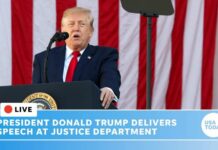

President Trump said a pardon for Nvidia’s Jensen Huang is “always an option” — then argued it likely will not be needed, even as questions mount about what the government actually reviewed.
Story Snapshot
- Trump said a pardon for Huang is possible but unnecessary, citing no known charges.
- Vice President JD Vance said officials told him Huang is under no investigation.
- Reports said Attorney General Todd Blanche found no criminal violations tied to Huang.
- Democrats pressed why “exoneration” was claimed without a formal probe record.
What Trump and Vance Said, and Why It Matters
President Trump told reporters that pardoning Jensen Huang is “always an option,” but added he does not think it will be necessary. Those comments came as media attention focused on national security questions and export rules around advanced chips. Vice President JD Vance backed that view and said government officials told him Huang was not under investigation. Together, the statements set the White House line: no case, no charges, and likely no need for clemency.
Trump also said he helped convince Nvidia’s board to bring Huang back as chief executive after his brief exit. Reporting said the President took credit for pushing directors toward reinstatement, with allies helping make the case. That personal involvement ties business decisions to presidential power, which raises old worries on both left and right about favoritism and elite access inside Washington’s decision loop, even if no crime is alleged.
What We Know — and What We Do Not
Coverage described Attorney General Todd Blanche as concluding there was no evidence Huang broke criminal laws, based in part on Justice Department work that touched Nvidia customers. At the same time, reporting did not show a formal case file, a closing memo, or a public finding that addressed every national security claim. That gap leaves room for arguments that “no investigation” is not proof that nothing happened.
Democratic lawmakers, led by Representative Jamie Raskin, challenged the administration’s framing. Raskin asked what Huang had been “exonerated” of if the Justice Department never opened a formal probe. He criticized Blanche for not answering basic questions about any review. Those questions may grow louder if Congress seeks records about how officials assessed national security risks tied to chips and alleged foreign influence.
The National Security Backdrop Driving the Fight
CNN reported that some lawmakers were told Huang was the target of a foreign intelligence effort because of his close relationship with a woman identified as Alice Huang. A separate CNN report said intelligence intercepts suggested an affair while officials were still reviewing her ties to China’s government. These reports fueled political heat, even as the administration’s public stance said there was no active case against Huang.
⚖️ "It's always an option, I guess, but I don't think it's necessary." Trump leaves the door open to a possible pardon for Jensen Huang and urges him to tell the truth before Congress 👇 https://t.co/6XNyojwC76
— VOZ (@Voz_US) November 25, 2026
The split between intelligence concerns and criminal exposure is the core tension. Intelligence flags do not always lead to charges. But when a President talks about pardons for a powerful business leader at the heart of a strategic industry, many Americans see the pattern they fear: insiders get calls returned, while regular people face strict rules without special help. That perception feeds bipartisan doubts about whether Washington protects the few over the many.
Why the Pardon Talk Lands So Hard
Modern presidents spark controversy when they discuss clemency before indictments or formal findings. Scholars have shown that the pardon power, while legal and broad, often draws suspicion when used or floated near political or corporate interests. Here, even the hint of a pardon became the headline, overshadowing the narrower claim that no charges are expected. That dynamic shapes public trust more than the legal details do.
For readers worried about national security, export controls, and a fair economy, two things can be true at once. First, officials can find no basis to charge Huang today. Second, the public can still demand proof that the review was real, thorough, and free of political pressure. Clear records — case numbers, scope notes, and closing decisions — would help answer both sides. Without them, the vacuum fills with leaks, spin, and deeper cynicism.
What to Watch Next
Watch for Congress to seek documents from the Justice Department and Nvidia. Lawmakers may request board minutes, communications with the White House, and any written assurances about investigations or national security. If those records exist and match the public claims, the heat may cool. If they do not, expect tougher hearings and louder calls to tighten chip exports and corporate compliance. Either way, the government’s credibility is the stake on the table.
Sources:
youtube.com, rmb.reuters.com, thehill.com, nbcnews.com, centredaily.com, gizmodo.com, kmbc.com
© dailyanswer.org 2026. All rights reserved.