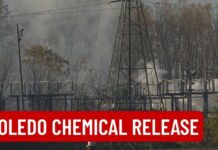

Cuba’s entire electric grid crashed into a nationwide blackout, exposing how fast a fragile system can fail under stress.
Story Snapshot
- Officials confirmed a total collapse of Cuba’s national grid and a islandwide outage.
- The government began restoration protocols while it investigated the cause.
- Repeated blackouts trace to fuel shortages and aging power plants, according to multiple reports.
- The crisis highlights how energy fragility threatens hospitals, food supply, and basic services.
What Officials Confirmed Happened
Cuba’s Ministry of Energy and Mines said the national power grid suffered a “total collapse” on Friday, cutting electricity across the island of roughly nine million people. State utility Unión Eléctrica reported a complete disconnection of the national system and said service-restoration procedures had started while the cause was under review. Reporters on the ground have documented similar nationwide outages several times this year as the grid moves from strained conditions to full failure in a single cascade.
Authorities often restore service in steps after these events, first lighting parts of Havana and key facilities, then reconnecting other regions as generation and transmission stabilize. That process can take hours or days, depending on plant readiness and available fuel. During past collapses, the utility warned of sharp supply gaps versus demand, showing how little reserve capacity the system holds when one large unit trips offline. Friday’s full outage fits this pattern of tight margins and fast, systemwide knock-on effects.
Why The Grid Keeps Failing
Reuters and other outlets have reported that Cuba’s grid operates with old thermal plants, frequent breakdowns, and chronic fuel shortages, which together leave the system near its limits even on normal days. Analysts describe a countrywide problem, not a single weak link: deteriorated generation, a thin maintenance pipeline, and too little new capacity to back up failures. When demand rises or a major unit trips, the protection systems can separate the island into blackouts to avoid worse damage, which then requires a careful, slow restart.
Coverage this year also notes the policy fight over blame. Cuban officials point to tighter United States sanctions and what they call an oil blockade that restricts fuel imports and spare parts; independent experts add decades of underinvestment and plant decay as core drivers. While observers differ on which factor weighs most, the public record aligns on one point: the grid has become fragile enough that one fault can darken the nation, and recovery struggles to keep up with repeated failures.
What This Means For People And For The Region
Nationwide blackouts hit basic needs first. Hospitals switch to generators, food storage faces spoilage, water pumping slows, and phone and internet service can drop when backup power runs low. Small shops and households lose income and supplies, while schools and transit systems stall. For Americans watching from ninety miles away, the lesson is not abstract. A brittle grid anywhere shows how energy security underpins health care, trade, and public safety. When margins vanish, one trip can cascade into a national emergency.
🚨 GLOBAL PULSE NEWS | CUBA
🇨🇺 NATIONAL POWER GRID COLLAPSES
Cuba has been hit by another nationwide blackout after its electrical grid suffered a total collapse, leaving millions without power.
Authorities said a failure involving high-voltage transmission lines triggered… pic.twitter.com/PgJBnTXDku
— GLOBAL PULSE NEWS (@GLOBALPULScgid) September 19, 2026
Both the right and the left can see the warning light here. Central planners promised reliability; instead, politics, neglect, and scarcity left people in the dark. Markets promised efficiency; without fuel and maintenance, efficiency collapses too. Strong nations keep power generation diverse, add reserves, harden transmission, and publish clear plans the public can judge. Cuba’s latest collapse underscores a simple rule: without steady power, there is no modern economy, and faith in leaders fades fast.
Sources:
globalbankingandfinance.com, wftv.com, reuters.com, riotimesonline.com, aljazeera.com, foxnews.com
© dailyanswer.org 2026. All rights reserved.