

(DailyAnswer.org) – Governor Pritzker’s accusation that President Trump suffers from dementia, made as National Guard troops arrived in Illinois against state wishes, highlights an explosive new front in the battle over federal authority, immigration, and states’ rights.
Story Snapshot
- President Trump deployed Texas National Guard troops to Chicago despite explicit opposition and legal action from Illinois officials.
- Governor Pritzker publicly questioned Trump’s cognitive fitness, sparking an unprecedented personal and political feud.
- Chicago’s declining violent crime rate undercuts federal claims of a law-and-order crisis as justification for the deployment.
- The deployment raises significant constitutional questions about the limits of presidential power and the erosion of state sovereignty.
Trump’s Unilateral Deployment Ignites Federal-State Showdown
On October 8, 2025, Texas National Guard troops arrived in Chicago under direct orders from President Trump, a move made without the request or consent of Illinois’s leadership. Governor JB Pritzker and Chicago Mayor Brandon Johnson had just filed a lawsuit to block the action, underscoring the state’s explicit opposition. A federal judge declined to stop the deployment, permitting troops to enter Illinois, despite the ongoing legal challenge. This confrontation marks a dramatic escalation in the ongoing struggle over immigration enforcement and the appropriate reach of federal power, especially in so-called “sanctuary” states.
President Trump justified the deployment by citing the need to protect federal Immigration and Customs Enforcement (ICE) facilities, describing ongoing local protests as violent and threatening. However, Chicago has recorded an unprecedented decrease in violent crime this year, contradicting assertions of an urgent public safety crisis. This mismatch between federal rhetoric and local crime data has fueled criticism from state officials, who view the deployment as politically motivated and unnecessary. The presence of troops in a city with declining violence raises concerns about the real motivations behind the intervention.
Pritzker’s Dementia Accusation and Political Fallout
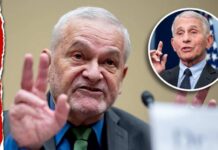
Governor Pritzker responded to Trump’s actions by telling the Chicago Tribune that the president “is suffering from dementia” and “doesn’t know anything that’s up to date.” These remarks, made prior to the troops’ departure from Texas, represent a striking escalation in rhetoric from a sitting governor against the Commander-in-Chief. Hours after the National Guard’s arrival, Trump retaliated on social media, calling for both Pritzker and Mayor Johnson to be jailed for “failing to protect” ICE officers. This exchange has shifted the conflict from a policy disagreement to deeply personal and partisan attacks, further polarizing the debate and energizing both leaders’ political bases.
Pritzker’s sharp criticism fits a broader pattern of resistance; he has consistently been one of Trump’s most vocal opponents, previously labeling the president a “wannabe dictator” and comparing him to Vladimir Putin. For Pritzker, who is seeking a third term as governor and is considered a potential 2028 presidential contender, this high-profile standoff bolsters his national profile. The governor has accused Trump of attempting to “militarize cities to affect the outcome of the 2026 election by impeding voting efforts in Democratic strongholds like Chicago.” With both sides framing the issue as a defense of core American values, the dispute is likely to reverberate well beyond Illinois.
Constitutional and Federalism Implications
The deployment of federal troops to a state that expressly rejected such intervention raises serious constitutional questions about the balance of power between the federal government and the states. Traditionally, National Guard deployments occur at the request of local officials, not by unilateral presidential order in the face of state opposition. By overriding Illinois’s wishes and threatening to jail its elected leaders, the Trump administration is asserting an unprecedented level of federal authority. This approach has alarmed not only Democratic officials but also some Republicans, such as Senator Thom Tillis, who questioned whether such tactics address underlying problems or simply mask failures at the state and local level.
Legal experts suggest that this episode may test the limits of presidential power under statutes like the Insurrection Act, though the specific legal framework invoked remains unclear. The judge’s refusal to block the deployment means the issue will likely continue to play out in the courts and political arena. For conservative observers concerned about constitutional principles and federal overreach, the episode is a reminder of the enduring importance of state sovereignty and checks on executive power, especially when it comes to deploying military force on American soil.
Immigration, Protests, and the Road Ahead
The immediate background to the deployment is the ongoing conflict over immigration enforcement. Illinois and Chicago maintain strong sanctuary policies, limiting cooperation with federal immigration authorities and becoming targets for Trump’s crackdown. Protests at a federal ICE facility in Broadview have continued, with some demonstrators arrested. Attorney General Pam Bondi and the administration argue that the National Guard’s presence is necessary to protect federal property and personnel, but state leaders see it as an overreaction and a violation of local autonomy.
Beyond the legal and political drama, the deployment risks inflaming tensions on the ground. Community leaders warn that sending in troops could escalate, rather than calm, protest activity, especially when crime is already down. The episode also sets a precedent for future federal interventions in states with policies at odds with Washington, raising the stakes for upcoming elections and the broader fight over American federalism. As both sides dig in, the nation watches to see how the courts, Congress, and the public will respond to this extraordinary clash over the limits of presidential power and the rights of the states.
Copyright 2025, DailyAnswer.org