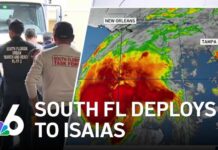

Florida’s pre-staged utility and state crews moved quickly after Isaias, helping limit outages and speed cleanup along the coast.
Story Snapshot
- Florida pre-positioned thousands of utility workers before Isaias neared the coast.
- Governor Ron DeSantis warned residents to prepare, even after the storm weakened.
- State steps kept fuel moving for response vehicles during the event.
- South Florida recorded minor damage and relatively few power losses.
Prepared Crews and Rapid Start to Restoration
Florida Power and Light reported about 10,000 personnel staged along the coast before Tropical Storm Isaias approached Florida. Company officials said crews were ready to restore power and remove hazards once winds eased, which set the state up for a faster recovery window. The U.S. Department of Energy later described large mutual-aid support across the East Coast as Isaias moved north. That broader surge showed how many crews stood by to keep services stable.
Governor Ron DeSantis urged residents not to relax when the forecast shifted. He said families should keep a week of food, water, and key medicines. He warned that winds and rain could still cause outages and block roads. Those messages matched the state’s readiness posture, which included staging resources and aligning fuel and logistics for a long weekend of work. Clear guidance helped people prepare for brief disruptions and reduced strain on responders.
Measured Impact in South Florida
National Weather Service Miami reported that South Florida saw minor wind and flooding impacts. The report counted about 3,000 power customers affected, with most outages in Palm Beach County. This scale was far lower than early fears and showed that Florida’s east coast avoided the worst of the storm’s punch. As Isaias tracked north, power losses and damage grew in other states, where millions experienced outages over several days, according to federal energy updates.
Florida’s experience fit a common hurricane pattern. Officials prepared for a strong hit, but the storm spared the state from severe damage. That mix can make it hard to judge response quality at a glance. Preparations were real and costly, yet the outcome looked mild. In these cases, readiness still matters. Quick starts on road access and line repairs reduce risk to hospitals, seniors, small businesses, and working families when the next band of storms arrives.
Fuel, Logistics, and the Wider Response
State actions kept fuel moving to support trucks, generators, and supply runs. Florida lifted weight rules for fuel carriers during the event, and officials reported no shortages that would slow response work. These steps help crews reach downed lines, clear debris, and power key sites. When storms stack up, small delays can snowball. Keeping fuel flowing and loaders, bucket trucks, and patrols supplied can save hours across hundreds of jobs.
Your State Troopers have been actively supporting response and recovery efforts to Hurricane #Isaias, clearing roadways, escorting critical supplies, and assisting utility restoration crews since 2AM.
Always on. Always ready.#FHP #hurricaneisaias #Florida #StateTrooper pic.twitter.com/NkfZsOh85X
— FLHSMV (@FLHSMV) October 10, 2026
Federal situation reports show how Isaias strained states up the coast after it left Florida. Utilities used mutual-aid crews from many states to speed restoration. That model depends on stable staging areas and good routes, which Florida had in place as the storm brushed past. While the worst damage landed elsewhere, Florida’s mix of warnings, staging, and logistics showed a working playbook. It is the kind of groundwork that both taxpayers and businesses expect during hurricane season.
Sources:
facebook.com, energy.gov, wtae.com, nps.gov, news4jax.com, 13abc.com
© dailyanswer.org 2026. All rights reserved.