
Fox News’ primetime shows skipped President Trump’s sudden ban on CNN, MS NOW, and Politico from the White House, even as major outlets warned it sets up a fresh First Amendment fight.
Story Snapshot
- Trump said he banned three outlets from the White House “effective immediately” for “fake news”.
- CNN said such a ban would be an unconstitutional curb on press rights.
- Courts have recently limited viewpoint-based press exclusions in White House spaces.
- Fox News’ primetime lineup offered no coverage of the ban the same evening, despite wide reporting elsewhere.
What President Trump Announced And Why It Matters
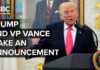
On September 18, President Trump said he was banning CNN, MS NOW, and Politico from the White House “effective immediately,” citing what he called constant “fake news” coverage. The announcement named the outlets and framed the move as punishment for biased or false reporting. Major news organizations covered the statement within hours and described the action as a direct test of constitutional protections for a free press. The White House did not release a detailed directive outlining scope or enforcement.
CNN responded that it stands behind its White House reporters and said any such ban would be an illegal assault on press freedom guaranteed by the Constitution. Reporters from the targeted outlets continued to occupy workspace near the briefing room after the announcement, adding uncertainty about how, where, and when limits would take effect. That gap between rhetoric and implementation leaves a key question: does the “ban” affect daily access, pool rotations, or only certain events?
How Recent Court Rulings Shape The Playing Field
Recent court rulings have set guardrails on how the government can manage press access. A federal district court held that once the government opens spaces like the Oval Office or Air Force One to some reporters, it cannot exclude others based on viewpoint. Legal briefs in the Associated Press case applied this standard to White House press access disputes, requiring viewpoint neutrality and reasonableness when restricting entry. These rulings suggest viewpoint-based bans face steep legal hurdles.
An appeals court decision introduced some nuance by allowing limits in very restricted settings, but the broader principle against viewpoint discrimination remains central in lower court opinions and press-law analyses. Because Trump’s announcement tied the ban to alleged “fake news,” challengers would likely argue it targets viewpoint, not neutral rules. That makes any sustained exclusion vulnerable in court if implementation matches the rhetoric.
Why Fox News’ Primetime Silence Stands Out
Major outlets led with the constitutional stakes and the immediate clash with the targeted organizations. Fox News’ primetime lineup, however, did not cover the ban that same evening, even as the story trended across television and digital platforms. That choice matters because primetime shows reach large, highly engaged audiences who shape political narratives. Skipping the story left many viewers without key facts about an action that could change how the White House handles media access.
CNN and MSNOW being escorted off the White House media tent area and the grounds.
Trump isn’t messing around pic.twitter.com/FzZPlLmlih
— John John (@RenataScaq72342) September 19, 2026
Viewers across the spectrum worry that elites in government and media play by special rules while the public gets half the picture. When a president vows to block reporters and major shows ignore it, trust erodes further. Conservatives see long-running bias and demand accountability. Liberals see government power used to punish critics. Both sides increasingly see a system that shields itself from scrutiny. Transparent standards, public rules, and equal access are the fix. Without them, the fight will move to the courts—and to public opinion.
Sources:
variety.com, fox17.com, english.news.cn, ynetnews.com, npr.org, nytimes.com, politico.com
© dailyanswer.org 2026. All rights reserved.