

(DailyAnswer.org) – Federal intervention in the Illinois assault weapons ban fight is not just a legal maneuver, it’s a high-stakes collision of American ideals, state sovereignty, and the future of gun rights, with the Trump DOJ stepping squarely into the center ring.
Story Snapshot
- Trump DOJ, led by Harmeet Dhillon, has joined the NRA lawsuit challenging Illinois’ assault weapons ban, calling it unconstitutional.
- The case marks an extraordinary moment where federal power is leveraged against a state’s gun control law, with national implications.
- Oral arguments are set for later this month, with the DOJ’s Civil Rights Division demanding a prominent courtroom role.
- The outcome could redefine the balance of state and federal authority on Second Amendment rights across the country.
Federal Muscle Flexes Against Illinois Gun Control
On June 13, 2025, the Department of Justice under the Trump administration formally threw its weight behind the National Rifle Association’s lawsuit, targeting Illinois’ ban on so-called assault weapons. This move, orchestrated by Assistant Attorney General Harmeet Dhillon, signals a rare, direct federal challenge to a state gun law. The DOJ’s involvement amplifies the stakes, transforming what might have been a regional courtroom dispute into a flashpoint for the entire national debate over gun control and the Second Amendment.
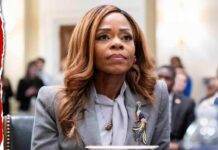
Harmeet Dhillon, a name already well known in civil rights circles, is now the face of the federal offensive. Her public statements frame Illinois’ ban as a constitutional affront, not just a policy misstep. With the DOJ’s Civil Rights Division leading the charge, the case is no longer just about Illinois, it’s about whether federal authorities will redraw the boundaries of state power over firearms regulation. The Trump DOJ’s alignment with the NRA in this fight is a signal to gun owners and advocacy groups nationwide: Washington is back in the fray, and the Second Amendment will be defended at the highest levels.
The Legal and Political Stakes in the Spotlight
Illinois’ assault weapons ban was originally enacted in response to a surge in gun violence, with lawmakers arguing that restricting certain semi-automatic firearms would make communities safer. The law quickly became the target of lawsuits from the NRA and allied gun rights organizations, who argue that such bans infringe on constitutionally protected rights. With the DOJ’s intervention, the balance of power in the courtroom has shifted. Federal lawyers are not just submitting briefs, they are demanding to present oral arguments, scheduled for later this month, a move rarely seen in state-level gun law disputes.
Legal experts and advocates on both sides recognize the significance. Supporters of the DOJ’s action argue that the federal government has a duty to step in when state laws violate core constitutional protections. Opponents warn that this is federal overreach, undermining the ability of states to address public safety in ways that reflect local needs and values. The specter of Supreme Court precedents, such as District of Columbia v. Heller and New York State Rifle & Pistol Association v. Bruen, looms large, as both sides prepare to argue not just the specifics of Illinois law, but the very scope of the Second Amendment in modern America.
Who Holds the Power, and Who Stands to Lose?
With the DOJ and NRA now acting in concert, Illinois faces a formidable alliance. The case has drawn in a constellation of stakeholders: state officials defending the ban, gun control advocates warning of increased risks if the law is struck down, and gun rights groups eager for a precedent that could ripple nationwide. Federal judges hold the gavel, but the political and cultural reverberations are already being felt. For gun owners and retailers in Illinois, the outcome could mean greater access to firearms currently off-limits. For victims and families affected by gun violence, the stakes are deeply personal, a reminder that courtroom decisions can shape lives far beyond legal abstractions.
Economically, if the ban is overturned, the firearms industry could see an immediate surge, while advocacy groups may double down on campaigns either for or against further restrictions. Socially and politically, the fight is a microcosm of the larger national debate: Where is the line between individual liberty and collective security? Who decides, states, or the federal government? The answers may set the tone for congressional action and future court battles nationwide.
Expert Perspectives and the Road Ahead
Second Amendment advocates frame the DOJ’s intervention as long overdue, a necessary corrective to what they see as a patchwork of unconstitutional state restrictions. Gun control experts, on the other hand, caution that fewer restrictions could exacerbate gun violence, citing data from states with more permissive laws. Legal scholars are watching closely, noting that while federal challenges to state gun laws are rare, this case could become a template for future disputes, especially if the courts side with the DOJ and NRA.
What happens in the next few weeks could reverberate for years. If the federal court rules against Illinois, other states with similar laws may face immediate legal challenges. If the court upholds the ban, it could embolden states to push the limits of gun control further. Either way, this case’s outcome will almost certainly shape not only the future of gun legislation but the ongoing tug-of-war between state and federal power in the United States.
Copyright 2025, DailyAnswer.org