

(DailyAnswer.org) – A single endorsement, when timed with surgical precision, can turn a perennial underdog into the favorite, and in Michigan’s 2026 Senate race, Donald Trump’s early backing of Mike Rogers has detonated old assumptions and set the political world on edge.
Quick Take
- Trump’s early endorsement has unified Michigan Republicans and cleared the field for Rogers.
- Democrats are locked in a contentious primary, risking a fractured base in November.
- The Senate seat has been in Democratic hands since 1979, making this the GOP’s best flipping chance in decades.
- The race’s outcome could shift the Senate balance and signal a new political era for Michigan and beyond.
Trump’s Early Move Reshapes Michigan’s Political Map
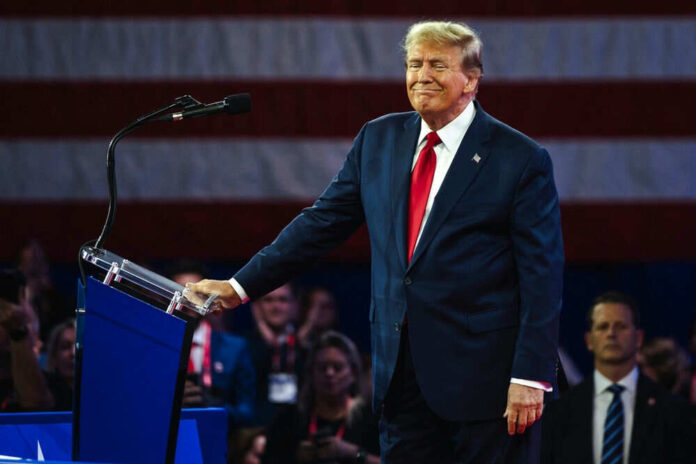
Mike Rogers, a familiar name in Michigan politics, endured a narrow loss for Senate in 2024. Most candidates would retreat. Instead, Rogers doubled down, launching a new campaign for Michigan’s open Senate seat just as Democratic Senator Gary Peters announced his retirement. The real jolt came in July 2025: Donald Trump, fresh off his own Michigan win in the previous presidential cycle, endorsed Rogers before the ink was dry on rival Bill Huizenga’s withdrawal. The impact was immediate, no serious GOP challenger emerged. Suddenly, Rogers had the rarest of commodities in swing-state politics: a clear runway from spring to November.
While the Republican side coalesced, Democrats faced a free-for-all. Three major contenders, Haley Stevens, Mallory McMorrow, and Abdul El-Sayed, dug in for a bruising primary. Stevens boasted establishment credentials, McMorrow led fundraising with progressive zeal, and El-Sayed, carrying Bernie Sanders’ endorsement, drew the party’s left flank. No consensus emerged. The GOP, meanwhile, shifted resources and messaging to the general election, with the National Republican Senatorial Committee and heavy-hitter donors pouring in early support. Rogers’ campaign quietly built a sprawling ground operation, recruiting over 100 county co-chairs and reaching for both Republican loyalists and restless Democrats.
Why This Senate Seat Is Suddenly Up for Grabs
The Michigan Senate seat has not seen a Republican win since the disco era, 1979. Yet, the state’s political winds are swirling differently now. Trump’s 2024 victory in Michigan, however slim, shattered the old narrative that Michigan was reliably blue. Add in the volatility of recent gubernatorial races, each time the incumbent party has lost, the challenger has won, and you get a climate where nothing is sacred and every seat is in play. Gary Peters’ retirement only amplifies the uncertainty, erasing the advantages of incumbency and seniority for Democrats. For the GOP, the moment was perfectly timed: a state on the cusp of change, an open seat, and a party hungry for a comeback.
For Rogers, this isn’t just a personal comeback; it’s a test case for whether Trump’s brand, paired with a disciplined, veteran candidate, can break the Democratic hold on a state that’s become the Midwest’s swing-state epicenter. Democrats, meanwhile, are playing defense with a divided team, hoping the primary winner can quickly mend fences and raise enough money to withstand a fully coordinated Republican assault. Both parties know the stakes: Senate control could hinge on Michigan, and with it, the direction of national policy on manufacturing, taxes, and labor.
Inside the Calculus: Unity Versus Division
Trump’s endorsement, delivered earlier than usual, was not simply ceremonial. It functioned as a strategic lever, nudging Huizenga out and signaling to donors and activists that the primary was over before it began. Senate GOP leaders, from the NRSC to John Thune, echoed the message: Rogers is the quality candidate we need. Democrats, by contrast, found themselves in a tactical bind. Their primary, though brimming with talent and ideas, risked sapping resources and exposing rifts on everything from economic policy to party identity. Polls reflected the malaise, no clear Democratic frontrunner, no easy path to unity. Rogers capitalized, tailoring his pitch to working-class voters battered by economic swings, promising a manufacturing revival, tax relief, and a return to “Michigan values.”
As campaign finance filings rolled in, the contrast sharpened. Rogers’ war chest, supercharged by national GOP money and Trump’s fundraising prowess, dwarfed individual Democratic rivals fighting each other for every dollar. Rogers’ official campaign platform hammered home the themes that won Trump the state: jobs, border security, and a relentless focus on Michigan’s economic pain points. Meanwhile, Democrats struggled to break out of their internal feud, knowing that every day spent attacking fellow Democrats was a day lost in the general election fight.
National Stakes and the Road Ahead
The Michigan Senate battle is not just another race, it’s a bellwether for the entire country. If Rogers succeeds, the GOP could seize control of the Senate, rewriting the map for legislation on taxes, healthcare, and labor. Michigan’s working-class and manufacturing-heavy communities, long courted by both parties, will decide the outcome. The simultaneous open gubernatorial race adds another layer, likely boosting turnout and amplifying the stakes for every down-ballot candidate. Political experts agree: early party unity and a fractured opposition are rare gifts in high-stakes elections. But Michigan’s electorate is famously unpredictable. Democrats could rally after the primary, especially if national issues intensify or if Trump’s involvement motivates the opposition as much as it energizes the base.
EXCLUSIVE: Trump-Endorsed Mike Rogers Says GOP Has Best Shot To Flip Key Seat Since 1979 https://t.co/80HkaLd72n
— IJR (@TheIJR) July 31, 2025
For now, the only certainty is uncertainty. Rogers has the momentum, the money, and the machinery. Democrats still have the numbers and, potentially, the backlash to Trumpism. Every twist in this race will ripple beyond Michigan, shaping the next chapter of American politics and reminding anyone watching: in the battleground states, everything can change, with a single, well-timed move.
Copyright 2025, DailyAnswer.org