
(DailyAnswer.org) – As Cuba goes dark under nationwide blackouts, President Trump is openly signaling that America may force a turning point the communist regime can’t survive.
Story Snapshot
- Cuban protests reached day four as fuel shortages and power outages intensified economic collapse.
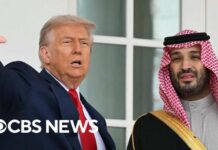
- Trump, speaking in Doral during the “Shield of the Americas” summit, warned of “imminent action” and “swift changes” for Cuba.
- The White House issued a January 2026 proclamation targeting threats posed by Cuba’s government, sharpening the legal and policy posture.
- U.S. actions in Venezuela earlier in 2026 are being cited as a precedent for how Washington could pressure Havana.
Protests and Blackouts Put Cuba’s Regime Under Its Heaviest Pressure in Years
Protests in Cuba entered a fourth day as severe fuel shortages and widespread grid failures left parts of the island in darkness. Reporting described a fast-moving breakdown: blackouts, scarcity, and worsening economic conditions pushing citizens into the streets. The unrest echoes earlier episodes of anti-regime protest, but the current wave is occurring while Cuba’s traditional lifelines appear weaker and while Washington is signaling a more confrontational posture than during the previous decade.
Trump’s comments are landing in a region where Cuban Americans have watched prior protest movements crushed by state force. The research reflects that skepticism runs high toward official regime messaging and that repression often increases when public unrest spreads. That matters because prolonged blackouts and empty fuel stations create a basic governance test: if the state can’t keep lights on and transportation moving, public confidence erodes quickly, and crackdowns can accelerate the very instability the regime fears.
Trump’s “Imminent Action” Warning Raises the Stakes for Havana—and for Washington
President Trump addressed Cuba’s crisis from Doral, Florida, tying the protests directly to the regime’s apparent resource collapse. At the summit, he described the communist government as being “at the end of the line,” arguing it lacks the money and oil to sustain itself. The reporting also emphasizes a key uncertainty: Trump has not publicly defined what “imminent action” means—whether it is primarily diplomatic, economic, legal, or a Venezuela-style operation.
The research indicates the administration is pairing rhetoric with policy infrastructure. A White House presidential action issued in January 2026 frames Cuba’s government as posing threats to the United States, reinforcing a national-security justification for sharper measures. Separately, reporting referenced prosecutors in Florida preparing criminal cases against Cuban leaders, a move portrayed as similar to steps surrounding Venezuela. These combined tracks—executive authority and legal pressure—signal a strategy designed to tighten the regime’s options.
Why Venezuela’s 2026 Precedent Is Now a Central Reference Point
Analysts in the research repeatedly point to January 3, 2026, when a U.S. military raid captured former Venezuelan President Nicolás Maduro. Whether one views that as deterrence or escalation, it reshaped regional expectations about what Washington might do when it claims a security imperative. The Cuba coverage explicitly draws the parallel, suggesting the administration believes previous warnings were ignored in Venezuela and that decisive action changed the trajectory there.
For conservative readers concerned about constitutional government and border security, the practical question is scope and accountability: how any future Cuba action is justified, limited, and executed matters as much as the objective. The research does not provide operational details, which means the public cannot yet evaluate the full costs, risks, or legal architecture of “imminent action.” What is clear is that the administration is describing Cuba’s collapse as an urgent hemispheric security issue.
The “Shield of the Americas” Coalition Signals a Regional Push Against Leftist Regimes
The “Shield of the Americas” summit is presented as more than a speech venue; it is described as coalition-building among more than a dozen nations with a shared agenda of countering leftist regimes and cartel-linked instability. The research notes a broader pattern: U.S.-led action against Iran and Venezuelan cartels has weakened partners that previously buffered Havana, while diplomatic ties in the region appear to be shifting after the Venezuela operation.
In that context, Trump’s language about a coming “great new life” for Cuba reads as a promise of post-communist transition rather than a narrow policy tweak. Supporters see an opportunity to roll back a dictatorship that has lasted since 1959, while skeptics argue entrenched communist power rarely yields without force. The available reporting supports one conclusion: the administration is intentionally increasing pressure, while keeping the exact endgame ambiguous.
For Americans who endured years of globalist drift and soft-on-tyranny messaging, the Cuba story is a test of whether U.S. power will be used decisively, but responsibly. The research supports that Cuba’s internal breakdown—blackouts, fuel collapse, and public unrest—is real and accelerating. What remains unverified is the specific form of “imminent action,” the timeline, and how Washington will avoid unintended fallout while pursuing freedom and stability in the hemisphere.
Sources:
President Donald Trump warns of ‘imminent action’ on Cuba at Shield of the Americas summit
Addressing Threats to the United States by the Government of Cuba
Copyright 2026, DailyAnswer.org