
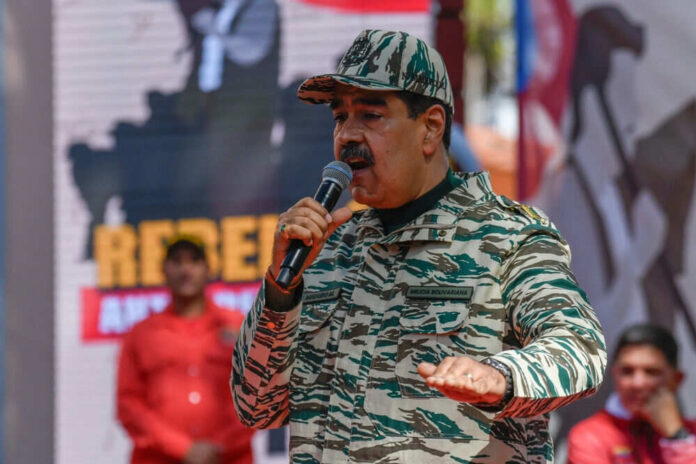
(DailyAnswer.org) – President Trump’s bold military strike captured narcoterrorist Nicolás Maduro, delivering long-overdue justice but igniting globalist outcries over U.S. sovereignty.
Story Snapshot
- U.S. forces executed Operation Absolute Resolve on January 3, 2026, using over 150 aircraft to bomb Venezuelan infrastructure and seize Maduro and his wife in Caracas.
- Maduro faces narcoterrorism charges in New York, rooted in a 2020 indictment, after rejecting exile and mocking U.S. warnings.
- Trump announced the capture via Truth Social, posting a photo of blindfolded Maduro aboard USS Iwo Jima, affirming American strength against foreign threats.
- Venezuelan VP Delcy Rodríguez decries it as “kidnapping” from Russia, while U.S. leaders like JD Vance demand return of stolen oil reserves.
- Uncertainties linger on Maduro’s trial legality and Venezuelan stability, testing limits of presidential power under Article II.
Operation Absolute Resolve Unfolds
U.S. military launched Operation Absolute Resolve at 2:00 AM on January 3, 2026, with explosions targeting northern Venezuelan infrastructure. Delta Force and CIA operatives advanced to Caracas, capturing President Nicolás Maduro and Cilia Flores. Over 150 aircraft supported the assault, overcoming Maduro’s defenses tied to Tren de Aragua smuggling networks. This followed late December CIA strikes on a remote port and Maduro’s rejection of exile to Turkey. President Trump had warned of strikes on January 2, responding to years of narcoterrorism and oil theft.
Trump’s Decisive Announcement and Transport
At 05:21 VET on January 3, President Trump posted on Truth Social announcing the capture, including a photo of blindfolded Maduro aboard USS Iwo Jima. Maduro and Flores flew to Stewart Air National Guard Base, then Manhattan for DEA processing. They now await federal court in Manhattan on January 5 at the Metropolitan Detention Center. This unprecedented action on sovereign soil echoes Bin Laden raid tactics but targets a sitting head of state indicted since 2020 for narcoterrorism. U.S. forces reported no injuries, showcasing precision.
Key U.S. Leaders Affirm Justice
Attorney General Pam Bondi announced Southern District of New York indictments superseding prior charges. Secretary of State Marco Rubio confirmed the arrest, stating no further U.S. action planned. Vice President JD Vance called Maduro a fugitive, demanding return of U.S.-claimed oil reserves stolen under his rule since 2013. Senator Mike Lee and Rep. Lisa McClain backed the move under Article II powers, protecting against imminent threats. These voices highlight enforcement of justice against globalist allies like Russia and Cuba.
Trump’s action counters Maduro’s public defiance, including dancing to a “No crazy war” remix mocking U.S. threats. Amid FAA flight bans and embassy shelter orders, Caracas faced power outages, exposing regime weaknesses.
Globalist Backlash and Uncertainties
Venezuelan VP Delcy Rodríguez, reportedly in Russia, denounced the capture as kidnapping via audio, demanding proof of life. Cuban officials claimed 32 military deaths and over 80 total Venezuelan casualties, figures unverified by U.S. sources. These allies frame the operation as imperialism, ignoring narcoterrorism ties. Legal questions persist on Article II scope for extraterritorial captures, with Lee initially uncertain before affirming validity. A Venezuelan power vacuum looms under Rodríguez’s interim lead.
Short-term unrest risks civil chaos and blackouts; long-term, it sets precedent for holding state actors accountable, straining Latin ties but bolstering U.S. security.
Sources:
2026 United States strikes in Venezuela – Wikipedia
Why was Venezuelan President Nicolas Maduro captured by the U.S. in 2026? – Britannica
Copyright 2026, DailyAnswer.org