
(DailyAnswer.org) – Trump’s latest confrontation with the press raises urgent questions about democracy’s cornerstone: free speech.
Story Snapshot
- Trump threatened an ABC reporter during a campaign event.
- The exchange ignited debates about press freedom and political rhetoric.
- The incident occurred amid a contentious 2024 election cycle.
- Both media and press freedom advocates responded swiftly.
Trump’s Combative Exchange with the Media
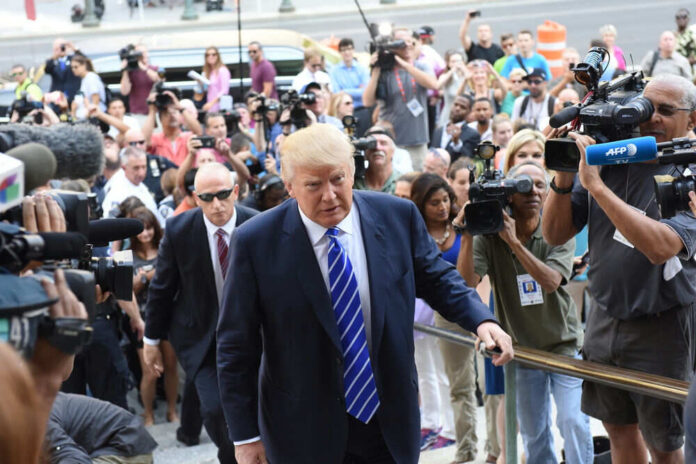
On June 4, 2024, during a campaign event in New York City, former President Donald Trump made headlines not for his policy proposals but for a contentious exchange with an ABC News reporter. The reporter questioned Trump about his stance on free speech, prompting a response that many interpreted as a threat. This incident quickly became a focal point in discussions about the boundaries of political rhetoric and the safety of journalists.
The significance of this exchange is amplified by the ongoing 2024 election cycle, where Trump’s combative relationship with the media is once again under scrutiny. This is not the first time Trump has clashed with journalists; his presidency was marked by frequent attacks on the press, which he often labeled as “fake news.” The latest incident raises concerns about whether such rhetoric could erode democratic norms and press freedoms.
Historical Tensions and Contemporary Concerns
Trump’s contentious relationship with the media dates back to his 2016 presidential campaign, where he often criticized mainstream outlets. This strained relationship continued during his presidency and into his current campaign. These exchanges have repeatedly raised questions about the safety and independence of journalists, especially in a politically polarized environment. The latest incident underscores the ongoing challenge of balancing press freedom with political discourse.
The press plays a crucial role in holding public figures accountable, and any threat to this freedom is a matter of public concern. Advocacy groups like the Committee to Protect Journalists have condemned Trump’s comments, warning that such rhetoric can have a chilling effect on journalistic inquiry and embolden further attacks on the media.
Media and Advocacy Group Reactions
In the immediate aftermath of the incident, ABC News issued a statement defending its reporter and condemning any threats against journalists. Press freedom organizations quickly rallied to call for increased protections for reporters and an apology from Trump. Despite these calls, Trump doubled down on his comments during a subsequent campaign rally, framing the incident as a demonstration of media bias.
The media’s role in this situation is complex. While they must report on such incidents, they also face the challenge of ensuring their journalists’ safety. This incident has prompted many media organizations to reassess their protocols for covering political events and handling potential threats.
Long-term Implications for Democracy and the Media
This incident has both short-term and long-term implications. In the immediate term, it highlights the increased security concerns for journalists covering political events. The broader, long-term concern is the potential erosion of press freedom norms and the normalization of hostile rhetoric toward the press. As the 2024 election cycle progresses, the incident serves as a stark reminder of the precarious balance between political discourse and the foundational principles of democracy.
The future of press freedom in the U.S. may hinge on how such incidents are addressed by political leaders and the public. Ensuring that journalists can operate without fear of retaliation is essential for maintaining a robust democracy. As this story continues to unfold, it will be crucial to watch how media organizations, press freedom advocates, and political figures navigate these complex dynamics.
Copyright 2025, DailyAnswer.org