
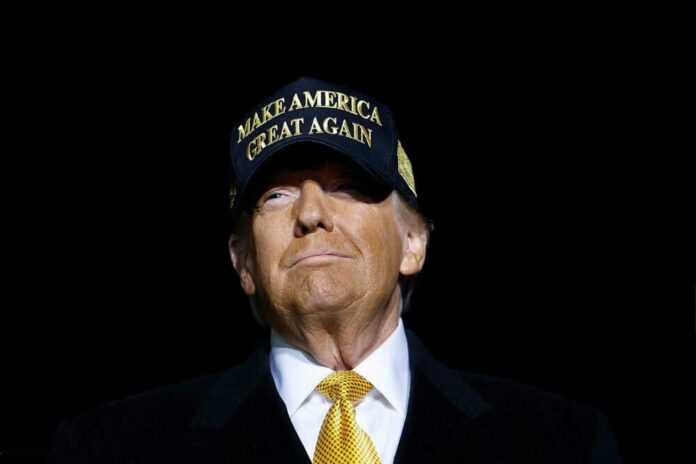
(DailyAnswer.org) – President Trump has ordered the U.S. military to directly target Latin American drug cartels, an unprecedented escalation that turns America’s longest-running drug war into a shooting war, with American forces now treating cartel operatives as enemy combatants rather than criminals.
Story Snapshot
- Trump signed a secret executive order in August 2025 authorizing military strikes on cartels designated as “foreign terrorist organizations,” leading to the first strike on September 2, 2025, against a cartel vessel in the Southern Caribbean.
- The move leverages post-9/11 counterterrorism laws, allowing U.S. forces to strike cartel targets anywhere in the world, including inside the U.S., and opens the door for the CIA to use lethal force against criminal organizations.
- Mexico’s government strongly opposes U.S. military intervention on its soil, but Trump’s administration frames the fentanyl crisis as a national security threat, with cartels operating in all 50 states and over 1,200 U.S. cities.
- Legal experts warn the campaign may violate international law and bypass congressional war powers, while defense analysts question whether the strategy has a clear endgame or risks spiraling violence.
- The campaign targets seven major cartels, including Sinaloa, Jalisco New Generation, and MS-13, and coincides with a fentanyl crisis that killed nearly 100,000 Americans last year.
From Law Enforcement to Armed Conflict
The August 2025 executive order marks a radical departure from decades of U.S. counter-narcotics policy. Previous efforts relied on law enforcement cooperation, intelligence sharing, and economic pressure. Trump’s order treats cartels as foreign terrorist organizations, unlocking legal authorities under the 2001 Authorization for Use of Military Force, the same framework used against al-Qaeda and ISIS. The first strike, on a vessel linked to the Venezuelan-based Tren de Aragua cartel, signals a new era where cartel members are no longer criminal suspects but legitimate military targets.
The CIA now has authorization to use lethal force against cartel operatives, a power previously reserved for foreign terrorists and hostile state actors.The administration has also established a homeland security task force to coordinate military, intelligence, and law enforcement actions within U.S. borders, effectively blurring the line between domestic policing and overseas warfare.
Legal and Constitutional Crossroads
Trump’s legal team argues that since cartel leaders are not elected officials, Executive Order 12333, which prohibits assassinations of foreign leaders, does not apply, and the terrorist designation justifies military action under existing U.S. law. However, specialists in the laws of war and executive power contend that Trump lacks clear legal authority and precedent to kill suspected drug smugglers, and that the campaign risks bypassing Congress and undermining constitutional checks on presidential war powers.
International lawyers raise alarms about potential violations of national sovereignty, especially if the U.S. conducts strikes in countries that have not consented to military action. The United Nations previously condemned the 1989 U.S. invasion of Panama as a “flagrant violation of international law,” and similar condemnation could follow if U.S. forces act unilaterally in Mexico or other nations. Domestically, the terrorist designation enables expanded surveillance, asset freezing, and harsher criminal penalties, but also raises questions about the use of military force on American soil.
Mexico’s Pushback and the Fentanyl Blame Game
Mexican President Claudia Sheinbaum has publicly rejected U.S. military intervention, turning down Trump’s proposal to send American soldiers to assist in Mexico’s drug war and warning against unauthorized cross-border strikes. The bilateral relationship, already strained by trade and migration disputes, now faces a new crisis over sovereignty and the use of force. Meanwhile, the Trump administration has framed the fentanyl crisis as “a sophisticated form of irregular warfare targeting American society, with cartels serving as proxies in a broader strategic campaign coordinated by China”, a narrative that links the drug war to great power competition and shifts blame for the opioid epidemic onto foreign adversaries.
Mexican and some U.S. experts argue that the real solution lies in reducing American demand for drugs, improving treatment, and targeting the financial networks that sustain cartels, rather than escalating military tactics that have failed to stem the flow of narcotics in the past. Mauricio Meschoulam, a foreign affairs expert at Universidad Iberoamericana, characterizes Trump’s approach as prioritizing “the spectacle of headline-grabbing blows against criminals” over substantive, lasting results.
Will It Work? Experts Predict Backfire
Defense analysts note that past drug wars have been plagued by “whack-a-mole tactics” that target specific kingpins or labs without addressing the root causes of drug trafficking. Trump’s campaign, while more aggressive, still lacks a clear strategic vision or defined end-state. Experts warn that military escalation could provoke retaliation from cartels, destabilize Mexico, and draw the U.S. into a protracted conflict with no exit strategy. The risk of collateral damage, civilian casualties, diplomatic fallout, and unintended consequences, looms large, especially if operations expand beyond the initial strikes.
Some predict the campaign will backfire, driving cartels further underground, fragmenting their leadership, and potentially increasing violence in both the U.S. and Latin America. Others argue that only a comprehensive approach, combining military pressure with demand reduction, economic development, and international cooperation, can hope to succeed where decades of enforcement have failed.
What Comes Next?
The Trump administration has signaled that more operations are coming, with the Pentagon and CIA actively planning additional strikes against cartel targets. The legal, diplomatic, and operational risks are significant, but so is the political payoff for a president who has long promised to take the fight directly to the cartels. The world is watching to see whether this new phase of the drug war will deliver results or become another chapter in America’s long history of costly, inconclusive interventions.
Copyright 2025, DailyAnswer.org