
(DailyAnswer.org) – Donald Trump’s bold stance on NATO’s response to Russian airspace violations has ignited a diplomatic firestorm, with potential ramifications for global security.
Story Snapshot
- Trump advocates for shooting down Russian aircraft in NATO airspace.
- Mike Waltz amplifies Trump’s message in a televised interview.
- Escalating rhetoric between U.S. and Russian leaders.
- Potential impact on NATO’s defense posture and global security.
Trump’s Provocative Call to Action
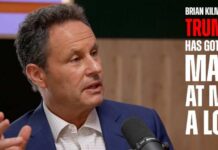
Donald Trump, the former President of the United States, has once again stirred the geopolitical pot with his recent statement suggesting that NATO countries should shoot down Russian aircraft that violate their airspace. This bold declaration aligns with America’s conservative values of strong defense and deterrence but risks escalating tensions with Russia to a dangerous level. Trump’s pronouncement has been echoed by Ambassador Mike Waltz, who directly warned Russian President Vladimir Putin that Trump is not making idle threats.
Waltz’s remarks, aired on Fox & Friends, underline the gravity of Trump’s position, effectively serving as a diplomatic warning to Russia. The backdrop for this unfolding drama is the ongoing conflict between Russia and Ukraine, a situation that has seen frequent Russian military incursions near NATO boundaries. With NATO’s collective defense principle under the microscope, Trump’s call for a forceful response aims to bolster the alliance’s deterrence capabilities.
NATO’s Historical Tensions with Russia
The tensions between NATO and Russia are not new. Since Russia’s annexation of Crimea in 2014 and its aggressive actions in Ukraine, NATO has been on high alert. The military alliance has repeatedly faced Russian aircraft entering or approaching its airspace, prompting intercepts and diplomatic protests. Historical precedents, such as Turkey’s downing of a Russian jet in 2015, underscore the risks of military confrontations over airspace violations. Trump’s statement, therefore, isn’t just a rhetorical flourish; it taps into a long-standing security dilemma faced by NATO.
As NATO states grapple with the implications of Trump’s stance, the alliance must consider the balance between deterrence and escalation. The stakes are high, with any misstep potentially leading to a broader conflict. NATO’s response to these tensions will likely influence its defense strategies and political dynamics within the alliance.
The Role of Key Stakeholders
Several key stakeholders are at the heart of this unfolding situation. Donald Trump’s influence over Republican foreign policy discourse remains significant, and his statements often serve as a bellwether for conservative defense positions. Mike Waltz, acting as a spokesperson for Trump’s views, bridges the gap between Trump’s rhetoric and official U.S. policy. Meanwhile, Vladimir Putin’s strategic maneuvers test NATO’s resolve and response capabilities.
NATO itself, comprising member states committed to collective defense, must navigate this complex landscape. The alliance’s credibility hinges on its ability to deter aggression without provoking a full-scale war. The U.S. administration’s role in shaping NATO’s response will be pivotal, with defense officials monitoring Russian actions and crafting appropriate strategies.
Potential Impacts and Future Developments
The implications of Trump’s call for action are both immediate and long-term. In the short term, heightened tensions between NATO and Russia could lead to increased military readiness and diplomatic efforts to defuse potential conflicts. The possibility of a military escalation remains a key risk, underscoring the importance of clear communication and adherence to rules of engagement.
In the long term, Trump’s proposal could influence NATO’s deterrence posture and U.S. foreign policy, especially if he returns to power. The risk of a direct military confrontation with Russia looms large, posing challenges for global security and international relations. As the situation evolves, NATO’s response will be crucial in maintaining stability and preventing unintended conflicts.
Copyright 2025, DailyAnswer.org