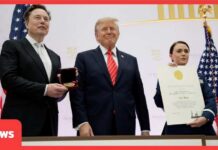

President Trump personally greeted China’s Xi Jinping on the tarmac and extended a three-day state visit, signaling high ceremony amid hard bargaining between the rivals.
Story Highlights
- Trump welcomed Xi at Joint Base Andrews and opened a full state visit with military honors.
- Talks center on trade, technology, Taiwan, Iran, and artificial intelligence safety steps.
- Officials extended the trade truce as both sides manage tensions without a big breakthrough.
- Analysts say the spectacle projects leverage for both capitals while real gains may be modest.
Protocol Signals: What the Tarmac Greeting Means
President Trump met President Xi at Joint Base Andrews on September 23, a rare move that stressed the visit’s importance and broke with usual protocol that greets leaders at the White House. The White House billed the trip as an official state visit with a formal welcome, review of the troops, and a state dinner. Ceremony in these meetings carries weight. It can suggest respect, set a calm tone, and signal to global markets that both sides want stability, at least for now.
Chinese and American officials also know the optics cut both ways. Beijing can show its public that Washington engages China at the highest level. Washington can show its allies and businesses that it can manage a fierce rivalry without tipping into crisis. That split-screen incentive helps explain the grand staging even when policy deals look small. It is a pattern in United States–China ties: strong symbols paired with cautious steps on substance.
What Is on the Table: Trade, Tech, Taiwan, and Iran
Talks in Washington focus on trade rules, sensitive technology, Taiwan, and the war-related tensions around Iran. Energy and agriculture trade remain core bargaining chips, along with rare earth minerals that power batteries and weapons systems. United States and Chinese teams also discussed artificial intelligence safeguards, including ways to keep powerful models away from non-state actors, reflecting rising global worries about misuse and accidents in advanced systems. Each area holds risks that can spill into markets and security.
Officials extended an existing trade truce as the leaders met, keeping tariffs or new penalties from spiking while talks continue. Earlier meetings this year produced few headline wins in science and technology, but they did set channels for follow-up on rules and commercial ties. Analysts expect this summit to echo that pattern: fewer big agreements, more guardrails, and a shared push to cool flashpoints. That approach keeps doors open without claiming a full reset.
Why the Ceremony Matters to Americans
Many Americans on the right and left doubt that Washington’s leaders are fixing core problems at home. They see high costs, weak wage growth, and a system that favors the well connected. A high-profile state visit can look like show over substance. Yet trade rules, tech flows, and supply chains affect food prices, energy bills, and factory jobs. When the White House rolls out the red carpet, it often aims to steady markets and protect those pocketbook issues while avoiding risky shocks.
Trump’s personal greeting can be read in two ways. Supporters may see a calculated gesture to buy calm and win space to press China on trade or Taiwan inside private talks. Critics may see proof that Beijing’s leverage on minerals and exports is forcing Washington to soften its tone. Both readings fit a “managed rivalry” frame: each side claims strength at home while they narrow near-term risks. The real test will be whether any steps lower costs or reduce strategic dangers that hit families and businesses.
Economic Stakes: Truce Today, Unfinished Business Tomorrow
Extending the trade truce helps prevent sudden tariff hikes that raise prices on goods Americans buy every week. It also gives time to negotiate targeted deals in agriculture and energy that can support farm states and keep fuel supplies steady. But truce is not victory. Structural fights over advanced chips, data controls, and industrial subsidies remain. Those fights drive supply chain shifts that take years to settle, and they shape where new factories and jobs will land.
CCP Chairman Lands on a U.S. Air Base. America Rolls Out the Carpet.
Xi Jinping arrived at Joint Base Andrews on September 23, 2026. President Trump met him on the tarmac — first American president in roughly sixty years to greet a foreign head of state there, Pope excepted. Red…
— Harmonic Shift (@harmonic_shift) September 24, 2026
Allies are also hedging. Some partner nations now seek space between Washington and Beijing, which makes coalition pressure on China harder to sustain. That means the United States must match ceremony with durable policy: clear rules on technology exports, smarter investment screening, and reliable energy plans that do not spike prices. Without that, a glossy summit risks looking like theater while the core balance of power and the cost of living keep moving in the wrong direction.
Sources:
theatlantic.com, reuters.com, internazionale.it, straitstimes.com, kathmandupost.com, whitehouse.gov, aljazeera.com, nytimes.com
© dailyanswer.org 2026. All rights reserved.