
(DailyAnswer.org) – If you want to see economists blush and political pundits scramble, just follow the trail of Trump’s economic record as it defies expectations and leaves critics searching for new talking points.
Story Highlights
- Trump’s second-term economic policies have produced strong growth, low unemployment, and falling inflation, upending progressive forecasts of disaster.
- The universal tariff and deregulation campaign have sparked fierce debates about long-term risks, but short-term results are undeniable.
- Liberal critics face a crisis of credibility as their warnings fail to materialize, forcing a reassessment of economic orthodoxy.
- Despite headline successes, underlying risks and political polarization threaten to reshape America’s future economic landscape.
Trump’s Economic Agenda: From Campaign Trail to Inauguration Drama
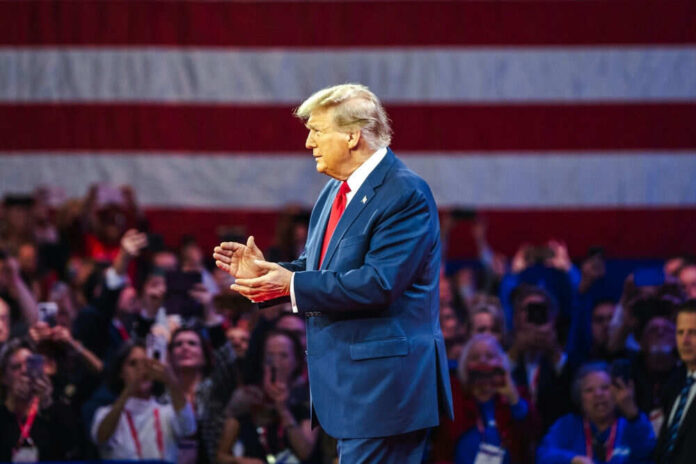
Donald Trump’s economic strategy in 2024 read like a greatest hits album for economic nationalists: sweeping tax cuts, a universal 10% tariff, and a new Department of Government Efficiency, DOGE, aimed at slashing federal spending. Riding a wave of voter dissatisfaction with persistent inflation under the Biden administration, Trump stormed back into the White House in November 2024, arguing that only aggressive reform could revive American prosperity and restore lost manufacturing might. The inauguration in January 2025 was more than ceremonial; it was a signal that a seismic shift was coming, to both policy and political debate.
Within weeks, DOGE announced $160 billion in federal savings, thanks to controversial layoffs and agency consolidations. The universal tariff landed with a thud on Wall Street, triggering a dramatic market selloff and sending global trading partners into a retaliatory frenzy. Yet, amid the chaos, early economic indicators told a different story. GDP growth accelerated, unemployment dropped, and inflation showed signs of retreat. The numbers taunted liberal critics who had predicted economic calamity, igniting a new era of ideological uncertainty in Washington.
Ideological Shockwaves: Liberals Confront Uncomfortable Data
The economic revival did not fit the script that mainstream economists and progressive policymakers had written. For years, these voices had warned that protectionism, sweeping deregulation, and aggressive tax cuts would lead to ballooning debt, rising prices, and international isolation. Instead, the data, at least in the short term, painted a picture of robust demand, strong hiring, and a manufacturing sector on the rebound. Liberal commentators found themselves in the awkward position of explaining away positive trends or shifting the conversation to lurking long-term risks. The credibility gap widened as Trump’s supporters seized on every positive jobs report and market rally as proof of vindication.
Business leaders and labor unions formed an uneasy chorus. Manufacturers and exporters cheered the protective barrier of tariffs and lighter regulatory burdens. Retailers and import-dependent sectors, however, braced for higher input costs and supply chain headaches. International trading partners retaliated with tariffs of their own, threatening American exporters and agricultural producers. The policy shockwaves reverberated far beyond Washington, forcing a re-examination of economic dogma on both sides of the aisle.
Political Polarization and Policy Risks: The Other Side of the Coin
Despite the strong surface numbers, warning lights flashed in the background. Fiscal hawks within Congress balked at the specter of rising deficits fueled by tax cuts and new spending initiatives. Federal employee unions, reeling from DOGE’s cost-cutting crusade, staged protests and threatened legal action. International analysts warned that trade wars could escalate, undermining global growth and destabilizing long-standing alliances. The stock market’s volatility in the wake of tariff announcements underscored persistent investor uncertainty about the sustainability of Trump’s agenda.
Trump’s executive authority clashed repeatedly with a divided Congress, which blocked further rounds of tax cuts and resisted deeper spending reductions. Policy uncertainty became the new normal, with headline economic gains frequently overshadowed by fears of debt spirals, inflationary pressures, and escalating trade disputes. The stage was set for a protracted struggle over the future direction of American capitalism, a struggle that would define the next decade of political and economic life.
Expert Perspectives: Vindication or Mirage?
Academic and industry experts remained split on the meaning of Trump’s economic surge. Stanford and Columbia analysts acknowledged the reality of short-term gains, while warning that “the tension between immediate prosperity and future vulnerability has rarely been more acute.” Pro-business voices applauded regulatory rollbacks and the dogged pursuit of government efficiency, but cautioned that trade disruptions and global retaliation could undermine hard-won gains.
Conservative commentators declared victory, pointing to the embarrassment of liberal critics and the reversal of economic orthodoxy. Centrist and left-leaning analysts, however, urged caution, emphasizing the fragility of the current expansion and the potential for long-term damage from fiscal and trade imbalances. The debate grew more polarized, with both camps selectively citing data to bolster their narratives. As the dust settled, one reality became clear: the Trump economy had not only upended policy expectations but had also forced a national reckoning over what truly drives American prosperity, and what risks the nation is willing to accept for short-term triumph.
Copyright 2025, DailyAnswer.org