

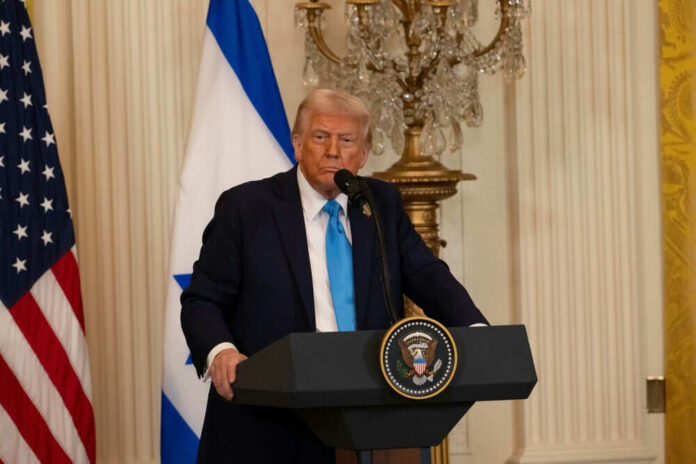
(DailyAnswer.org) – Trump’s ultimatum to Netanyahu has reshaped the dynamics in the Gaza conflict, leaving many wondering about the future of Middle East diplomacy.
Story Overview
- Trump issued a rare ultimatum to Israel, threatening to withdraw U.S. support.
- The ultimatum led to Netanyahu’s public endorsement of a U.S.-brokered peace plan.
- The peace plan was rapidly presented to Hamas through regional mediators.
- The move has significant implications for U.S. influence and Middle East diplomacy.
Trump’s Diplomatic Gambit
Donald Trump, in a decisive move, issued a powerful ultimatum to Israeli Prime Minister Benjamin Netanyahu, demanding the acceptance of a U.S.-brokered peace plan for Gaza. The message was clear: Israel must comply or face the possibility of losing crucial U.S. support. This ultimatum represented a rare and direct use of U.S. leverage over Israel, significantly impacting the dynamics of Middle East diplomacy.
Trump’s ultimatum was delivered during a high-profile meeting at the White House in late September 2025. Faced with the potential withdrawal of U.S. support, Netanyahu publicly endorsed a detailed 20-point peace plan. This plan, with strict timelines and conditions, was then presented to Hamas through Qatari and Egyptian mediators, marking a pivotal moment in the ongoing Gaza conflict.
Historical Context and Developments
The Gaza War began on October 7, 2023, when Hamas launched a large-scale attack on Israel. Israel’s military response led to significant destruction and a humanitarian crisis. Despite international outcry over civilian casualties, ceasefire negotiations stalled. The U.S. has historically been a staunch ally of Israel, providing diplomatic and military support, but Trump’s ultimatum marked a shift in how U.S. influence could be wielded.
Qatar and Egypt, acting as key regional mediators, have maintained open lines of communication with both Hamas and Israel. The urgency of the situation and the humanitarian toll in Gaza increased international pressure for a negotiated settlement. Trump’s plan was seen as a high-stakes gamble to leverage U.S. influence to achieve a breakthrough in the conflict.
Key Stakeholders and Power Dynamics
The main stakeholders in this diplomatic maneuver include Donald Trump, Benjamin Netanyahu, Hamas, and regional mediators from Qatar and Egypt. Trump’s role as the architect of the ultimatum and peace plan positioned him at the center of this geopolitical chess game. Netanyahu, under pressure to balance domestic political pressures, security objectives, and the need for U.S. support, found himself in a challenging position.
Hamas, controlling Gaza, faced a critical decision. Accepting the plan could lead to a ceasefire and potential relief for Gaza’s population, while rejection risked intensified conflict. Qatar and Egypt’s roles as intermediaries were crucial in facilitating communication and negotiations between the involved parties.
Potential Impacts and Reactions
The short-term implications of Trump’s ultimatum and the peace plan include the potential for a ceasefire and the release of hostages if Hamas accepts the terms. However, if Hamas rejects the ultimatum, the conflict could escalate with U.S.-backed Israeli actions. Long-term, the plan could lead to a restructuring of Gaza’s governance under international supervision, setting a precedent for U.S. influence in Israeli policy.
International reactions to the plan have been mixed. While Western allies largely support it as a path to peace, skepticism remains among Palestinians and some Arab states. Critics argue the plan lacks enforceable guarantees for Palestinian rights and may perpetuate occupation under a different guise. The outcome hinges on Hamas’s response and the ability of mediators to bridge deep divides.
Copyright 2025, DailyAnswer.org