
(DailyAnswer.org) – Trump’s Military Parade and Mass Arrests: Veterans Clash with Capitol Police as Marines Deploy in Los Angeles
Key Takeaways
- 60 veterans and military family members were arrested at the U.S. Capitol while protesting Trump’s military parade and troop deployments
- Trump deployed 700 Marines and 2,100 National Guard troops to Los Angeles despite legal challenges from Governor Newsom
- The controversial June 14th military parade featured 6,600 soldiers, 150 vehicles, and 50 aircraft, coinciding with Trump’s 79th birthday
- Nationwide “No Kings” protests erupted across major cities, with demonstrators opposing ICE operations and Trump’s immigration policies
- A federal court battle is ongoing over the constitutionality of deploying federal troops to states against governors’ wishes
Veterans Arrested at Capitol Protest
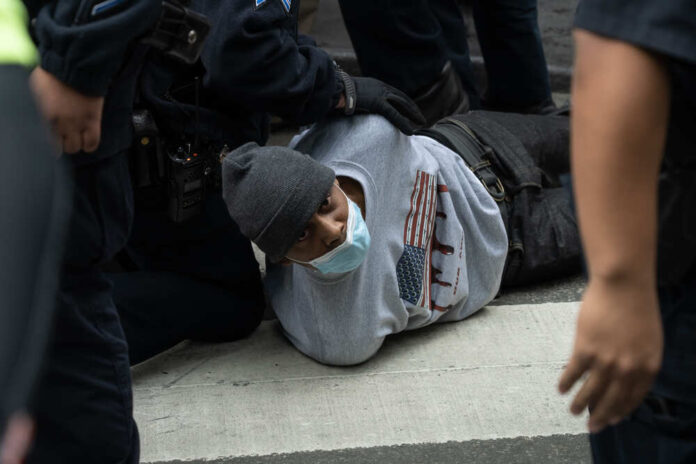
In a dramatic confrontation at the U.S. Capitol, approximately 60 veterans and military family members affiliated with “Veterans for Peace” were arrested on June 13, 2025, after breaching barricades and staging a sit-in protest. Capitol Police charged the demonstrators with unlawful demonstration, crossing police lines, and in some cases, assault on officers. Two protesters required hospitalization following the arrests, highlighting the intensity of the confrontation that unfolded on the Capitol grounds just one day before Trump’s planned military parade.
The veterans group specifically targeted what they called the “militarized response” to civilian protests and criticized the Trump administration’s deployment of troops to Los Angeles. Protesters demanded the redirection of military funds toward housing and healthcare programs, characterizing the Army’s 250th anniversary parade as nothing more than a “political stunt” designed to glorify Trump rather than honor military service. Their demonstration represented a significant escalation in veteran opposition to the administration’s domestic use of military forces.
Marines and National Guard Deploy to Los Angeles
President Trump’s controversial deployment of military personnel to Los Angeles has created an unprecedented constitutional standoff with California Governor Gavin Newsom. The operation involves 700 active-duty Marines from the 2nd Battalion, 7th Marines, alongside 2,100 California National Guard soldiers, forming what military officials have designated as “Task Force 51.” This substantial military presence has been positioned to guard federal properties, particularly the Wilshire Federal Building, during ongoing anti-ICE protests that have intensified across the city.
The legal battle over these deployments has reached the federal courts, with Governor Newsom filing suit against the Trump administration, denouncing the move as “authoritarian” and a violation of state sovereignty. While a federal judge initially blocked the deployments, the 9th Circuit Court of Appeals intervened to allow troops to remain in place until at least June 17, creating a tense legal limbo. President Trump has defended the deployments by claiming they prevented Los Angeles from “burning,” while critics view them as federal overreach and intimidation of legitimate protesters.
“This deployment represents a dangerous precedent of using military force against American citizens exercising their constitutional rights,” said Governor Newsom in a press statement. “We will not allow California to become a testing ground for authoritarian tactics that undermine our democracy and the rule of law.”
Trump’s Military Parade Sparks Nationwide Protests
President Trump’s military parade in Washington D.C., ostensibly celebrating the Army’s 250th anniversary but conspicuously scheduled on his 79th birthday, has become a lightning rod for nationwide protests. The June 14th spectacle featured an impressive display of military might: 6,600 soldiers marching in formation, 150 military vehicles rolling through the capital’s streets, and 50 aircraft conducting flyovers. Critics have noted the parade’s $22 million price tag at a time when veterans’ services remain underfunded, fueling outrage among military families and anti-war activists alike.
“This parade isn’t about honoring our military—it’s about Trump’s ego and his desire to project power like a dictator,” said James Harrington, a Vietnam veteran who participated in the Capitol protest. “Real patriots don’t need military parades; they need healthcare, housing, and respect for the Constitution we swore to defend.”
The parade has catalyzed “No Kings” protests across major American cities, with particularly large demonstrations in Denver and Los Angeles. In Denver, thousands gathered to protest both the parade and ICE operations, with speakers condemning what they described as the militarization of immigration enforcement. Meanwhile, in Los Angeles, demonstrators clashed with the newly deployed Marines and National Guard troops near federal buildings, creating tense standoffs that threatened to escalate into more serious confrontations.
Constitutional Crisis Looms Over Military Deployments
Legal experts warn that Trump’s deployment of federal troops against the explicit wishes of state governors represents a potential constitutional crisis. The Posse Comitatus Act generally prohibits the use of federal military forces for domestic law enforcement, though exceptions exist for protecting federal property. Critics argue that the Trump administration is exploiting these loopholes to effectively militarize its response to political opposition, particularly regarding immigration policy enforcement.
The ongoing court battle will likely determine whether presidents can deploy troops to states over governors’ objections when no insurrection has been declared. Conservative legal scholars defend Trump’s authority as commander-in-chief, while civil liberties organizations warn of dangerous precedents. The Supreme Court may ultimately need to resolve the dispute, with profound implications for federalism and executive power that could reshape the relationship between states and the federal government for generations to come.
As tensions escalate and the legal battles continue, Americans are witnessing a profound test of constitutional boundaries that many veterans who protested at the Capitol argue undermines the very principles they once swore to defend. With more protests planned and troops remaining in Los Angeles, the coming weeks may determine whether Trump’s military deployments represent a temporary crisis or a fundamental shift in how federal power is exercised against domestic opposition.
Copyright 2025, DailyAnswer.org