

(DailyAnswer.org) – Ukrainian President Zelensky’s shocking Christmas Eve wish for his enemy’s demise exposes the raw desperation of endless foreign wars that drain American resources and undermine President Trump’s peace efforts.
Story Snapshot
- Zelensky states Ukrainians share a wish: “‘May he perish,'” widely seen as targeting Putin amid Russian holiday attacks.
- Russia launches 131 drones and missiles on Christmas Eve, killing at least four and injuring dozens in Ukrainian cities.
- Kremlin blasts Zelensky’s words as “uncouth” and “embittered,” heightening tensions during U.S.-backed peace talks.
- President Trump’s 20-point plan stalls on Donbas and Zaporizhzhia, as Ukraine pushes demilitarized zones and referendums.
Zelensky’s Christmas Eve Address Ignites Controversy
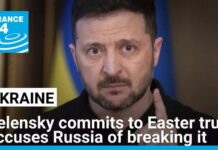
On December 24, 2025, Ukrainian President Volodymyr Zelensky posted a video to X condemning Russian attacks. He declared Ukrainians share “one dream” and “one wish”: “‘May he perish,’ each of us may think to ourselves.” Sources interpret this as referring to Russian President Vladimir Putin. Zelensky then pivoted to prayers for peace, emphasizing unity and faith amid shelling. This marks a shift from prior addresses, coinciding with Ukraine’s adoption of December 25 Christmas to break from Russian traditions. The remark underscores four years of war fatigue since Russia’s 2022 invasion.
Russian Assaults Escalate During Holidays
Russia launched 131 drones and missiles on Christmas Eve, striking Kherson, Zaporizhzhia, Odesa, and Sumy. The barrage killed at least two and injured 35 initially, with further hits on Odesa and Kharkiv claiming two more lives. Power outages plagued regions, echoing annual holiday offensives like 2022 blackouts and 2023’s failed ceasefire. Putin has rejected ultimatums on Donbas, maintaining pressure while Ukraine countered with drone strikes on Russian sites including the Yefremov plant and Crimea storage. These attacks highlight Russia’s pattern of targeting civilians during sacred times.
Kremlin’s Sharp Rebuttal and Peace Plan Details
On December 25, Kremlin spokesperson Dmitry Peskov condemned Zelensky’s address as “uncouth,” “strange,” “uncultured,” and “embittered.” Peskov signaled Russia would “take into account” U.S. input on peace but offered no ceasefire. Zelensky outlined openness to President Trump’s November 2025 20-point plan, including free economic zones and troop withdrawals for demilitarized Donbas and Zaporizhzhia under international monitoring, followed by referendums. Talks stall on these “most difficult” points, especially Zaporizhzhia nuclear plant control. Trump’s mediation aims to end the conflict through pragmatic concessions, prioritizing American interests over prolonged entanglement.
Conservatives cheer Trump’s approach, which rejects blank-check aid that fueled Biden-era overspending and globalism. Zelensky’s rhetoric risks hardening positions, complicating resolutions that secure U.S. leverage without endless taxpayer dollars.
Implications for U.S. Foreign Policy Under Trump
Zelensky’s words boost Ukrainian morale but may alienate mediators by signaling inflexibility. Short-term, rhetoric escalates amid ongoing strikes; long-term, it reinforces de-Russification efforts like the Christmas date shift. Affected Ukrainians face deaths, injuries, and disruptions in energy and industry. For America, this underscores the need for Trump’s decisive peace framework, avoiding fiscal mismanagement that inflated costs at home. Limited data on expert quotes frames it as emotional defiance versus Kremlin counter-narratives. Trump’s plan favors realistic outcomes, protecting U.S. sovereignty and resources from foreign quagmires.
Western outlets portray Zelensky’s statement as justified resolve; Russia deems it unbecoming. With attacks persisting, Trump’s leadership offers hope for stability without eroding American priorities like border security and economic strength.
Copyright 2025, DailyAnswer.org