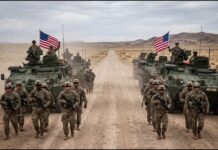

(DailyAnswer.org) – Pentagon brass are deploying elite combat troops toward Iran’s doorstep while the White House pushes diplomatic overtures that Tehran has already rejected—leaving Americans to wonder if we’re being set up for yet another regime-change quagmire that Trump promised to avoid.
Story Snapshot
- Pentagon deploys up to 4,000 82nd Airborne troops and 2,500 Marines to Middle East as U.S.-Iran war enters fourth week
- Iran dismisses Trump’s 15-point peace plan delivered via Pakistan, claiming U.S. tricked them twice before with ceasefire offers followed by bombings
- Ground forces prepare for operations securing Strait of Hormuz or Iran’s Kharg Island oil terminal, signaling escalation beyond airstrikes
- U.S. casualties mount to 13 dead and 290 wounded while gas prices surge to COVID-era levels amid global oil disruptions
Elite Combat Units Mobilize Amid Diplomatic Stalemate
The Pentagon ordered between 3,000 and 4,000 soldiers from the 82nd Airborne Division at Fort Bragg to deploy to the Middle East alongside 2,500 Marines aboard warships including the USS Boxer, according to defense officials speaking to Reuters and Military Times. These elite rapid-response units specialize in amphibious and ground operations, marking a stark shift from the air campaign that began February 28, 2026, when U.S. and Israeli forces struck 9,000 Iranian targets. The buildup grants military commanders options for seizing critical chokepoints like the Strait of Hormuz or Kharg Island, which handles 90 percent of Iranian oil exports.
President Trump alternated between pledging “I’m not putting troops anywhere” and asserting he’d do “whatever necessary,” while Defense Secretary Pete Hegseth told reporters the administration remains “laser-focused” on dismantling Iran’s missile capabilities. Vice President JD Vance and Secretary of State Marco Rubio spearheaded delivery of a 15-point peace proposal through Pakistani intermediaries, offering sanctions relief and Strait of Hormuz access in exchange for nuclear program limits. Iranian military spokesmen dismissed the effort, claiming the U.S. is “negotiating with itself” after allegedly deceiving Tehran twice before with ceasefire talks followed by renewed bombings.
Casualties and Costs Mount as War Drags into Fourth Week
The conflict has claimed 13 American lives and wounded 290 service members, with 10 injuries classified as serious while 255 troops returned to duty after treatment. U.S. combat operations expanded from precision airstrikes to include A-10 Warthogs and Apache helicopters engaging Iranian targets, while Tehran responded with missile and drone attacks targeting U.S. bases, Israeli positions, and regional energy infrastructure. Iran’s mining and drone operations effectively closed the Strait of Hormuz, a chokepoint carrying 20 percent of global oil traffic, sending U.S. gasoline prices rocketing to levels not seen since the pandemic shutdown.
Pentagon sources emphasized the troop deployments aim to enhance “potential future operations” rather than signaling imminent ground invasion of Iranian territory, though military analysts noted the 82nd Airborne and Marine Expeditionary Units are specifically trained for the rapid-seizure missions that would secure Kharg Island or reopen the Hormuz passage. The buildup timeline stretches across days rather than hours, allowing Trump administration officials to maintain diplomatic posturing while military capacity accumulates. Defense Secretary Hegseth projected a prolonged campaign focused on eliminating Iran’s missile arsenals and naval forces, echoing warnings that no quick resolution appears likely despite White House optimism about Thursday negotiations.
Trump’s Promise of No New Wars Collides with Mideast Reality
Conservative voters who backed Trump’s 2024 campaign on pledges to end endless wars now face a fourth week of combat operations with ground forces mobilizing for expanded missions, raising questions about whether this administration learned anything from two decades of failed nation-building. The deployment of elite units capable of occupying Iranian territory mirrors the mission creep that transformed Afghanistan and Iraq from limited strikes into generational commitments draining American blood and treasure. Iran’s documented distrust—citing two prior instances where ceasefire negotiations preceded U.S. bombings—suggests diplomatic off-ramps may be closing even as Trump officials tout progress toward de-escalation.
Energy costs crushing American families trace directly to this conflict’s disruption of global oil markets, with the Strait of Hormuz closure forcing tankers to navigate longer routes while Iranian attacks threaten remaining export channels. The stark contradiction between campaign rhetoric promising energy independence and policies entangling America in Mideast oil wars resonates with voters already frustrated by inflation from fiscal mismanagement. Military sources confirmed no final decision exists on entering Iranian territory, yet the specific capabilities of deploying airborne and amphibious forces—designed for seizing and holding hostile ground—signal preparation for exactly such contingencies, whether securing strategic islands or establishing forward bases for regime pressure.
Sources:
US expected to send thousands of soldiers to Middle East, sources say – Military Times
US to Send Another 2,500 Marines as Ground Option Emerges in Iran War – Military.com
US deploys troops to Middle East while pursuing Iran talks on Thursday – i24NEWS
Fox News Video Report on Iran Conflict
Copyright 2026, DailyAnswer.org