
A deadly bus crash that killed two people and injured many more has raised fresh questions about how America handles transportation safety and truth in the media.
Story Snapshot
- A coach bus carrying a Royal Jordanian Airlines flight crew crashed on the Long Island Expressway, killing the driver and one passenger.
- The bus hit multiple cars, crossed a concrete divider, overturned into oncoming lanes, and injured about two dozen people.
- The National Transportation Safety Board (NTSB) and New York Police Department (NYPD) launched a joint investigation but have not yet identified the cause.
- Unnamed media sources are pushing claims about the driver’s criminal past before officials release facts, feeding public distrust.
How the crash happened and who was on the bus
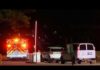
Late Monday night around 11:45 p.m., a chartered coach bus traveling westbound on the Long Island Expressway near the Greenpoint Avenue exit in Maspeth, Queens, collided with two vehicles, struck the center divider, overturned into the eastbound lanes, and then hit two more vehicles. Officials say the bus was serving as an airport shuttle and was carrying the crew of Royal Jordanian Flight 8261, which had arrived from Amman, Jordan at Kennedy Airport earlier that night. The crew was on the way to their hotel when the crash turned their routine transfer into a mass-casualty event.
Authorities report that the bus driver and one passenger were pronounced dead at the scene, while at least 20 others suffered injuries ranging from minor to serious. Drivers in the struck vehicles were also hurt, including one person taken to the hospital in critical condition and three others in stable condition. About two dozen bus passengers were sent to several area hospitals for evaluation and treatment. The crash shut down both directions of the expressway for hours, creating a massive traffic backup that stretched across key routes and reminded commuters how fragile basic mobility can feel when infrastructure fails.
What investigators know — and what they do not
The National Transportation Safety Board announced it is working with the New York Police Department to determine what caused the crash and why the bus crossed a concrete barrier meant to separate opposing lanes. The NYPD Collision Investigation Squad remained on scene overnight, gathering physical evidence and documenting the chain of impacts across several vehicles. Despite intense public interest and the scale of the response — including 79 fire and emergency personnel at one point — officials have not yet released a cause, stressing that they will not speculate before the facts are fully analyzed.
Key details remain unclear, including the exact number of passengers on the bus, the mechanism by which the vehicle breached the concrete barrier, and whether mechanical failure, driver error, or other factors played the main role. Past National Transportation Safety Board work on bus crashes has found that worn and underinflated tires, poor maintenance, and weak seat belt use can turn a routine trip into a deadly event, as in the 2023 charter bus crash in Orange County where bad tires caused the bus to lose control and plunge down an embankment. Investigators in Queens are expected to review maintenance records, tire condition, steering components, and driver fitness to see if similar problems helped set the stage for this crash.
Media leaks, driver allegations, and growing distrust
Even as official investigators ask for patience, media outlets have pushed ahead with dramatic claims about the bus driver’s background, citing unnamed sources who say he had seven prior arrests, including for burglary and sexual offenses, and was registered as a level 2 sex offender. Police and federal safety officials have not confirmed these claims or released the driver’s full history, yet the allegations are already shaping how many people view the crash and who they blame. This rush to frame the story around one person’s alleged past fits a pattern where early reporting often outruns verified facts, especially in high-profile transportation disasters.
LIE Bus Crash: A chartered coach bus carrying an airline flight crew to their hotel collided with vehicles and overturned on the westbound Long Island Expressway in Queens overnight. The crash claimed two lives—the driver and a passenger—and injured nearly 20 others
— Long Island Gazette (@Long_island_nys) July 1, 2026
For many Americans on both the right and the left, this episode feeds a familiar frustration. People see a system where huge questions — about safety oversight, company maintenance practices, and regulatory enforcement — move slowly or stay hidden, while sensational leaks about an individual’s record spread instantly and may never be fully checked. They watch a federal government that promises thorough investigations yet rarely explains why obvious risks, like worn tires or weak barriers, were not addressed before lives were lost. In that context, a bus carrying foreign airline workers crashing on a major New York highway becomes more than a local tragedy; it looks like another sign that everyday travelers are paying the price for a system that talks about safety more than it delivers it.
Why this crash taps into deeper fears about safety and accountability
Workers and families who rely on buses, planes, and highways already worry that powerful companies and regulators cut corners while ordinary people carry the risk. Past National Transportation Safety Board reports on fatal crashes have found repeated patterns: weak company safety programs, poor oversight by agencies, and a tendency to blame front-line workers while deeper causes go under-addressed. When a Royal Jordanian flight crew can survive a long international trip only to face deadly danger on a short hotel shuttle, it raises basic questions about whether America’s transportation system is truly putting human life first, or simply managing public anger after each disaster.
People who are tired of culture wars but united in distrust toward “elites” will see this case as another example of institutions controlling the narrative while dragging their feet on hard fixes. They are asked to trust that the National Transportation Safety Board and New York Police Department will get to the truth, yet they see media speculation go unchecked and critical information such as the company’s identity, maintenance history, and driver screening process kept out of public view. Until those facts are released — and until officials show they can learn from repeated failures instead of just issuing another report — many Americans will keep feeling that the system treats tragic crashes as isolated events, not symptoms of a deeper breakdown in responsibility.
Sources:
katu.com, ntsb.gov, youtube.com, nytimes.com, instagram.com
© dailyanswer.org 2026. All rights reserved.