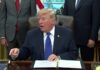

President Trump’s public hint of an Iran link to the Flydubai cockpit attack collided with Israel’s “too early to say” warning, exposing a rush-to-blame risk in a tense moment.
Story Snapshot
- Trump said an Iran tie “based on what I’m hearing” is likely, while reviews continue.
- Prime Minister Netanyahu said it is “too early to say” Iran was involved.
- Flydubai said motives remain unknown and urged against speculation.
- Investigators in Saudi Arabia are questioning the suspect as Israel joins the probe.
What President Trump and Israel Said, and Why It Matters
President Trump told reporters that an Iran connection to the Flydubai attack “based on what I’m hearing” seemed likely, and he raised the idea of a link to Iran’s Revolutionary Guard, while noting the review was still active. Hours around those remarks, Prime Minister Benjamin Netanyahu said it was “too early to say” if Iran had any role. That split shows how fast leaders speak in a crisis, even when facts are not firm. It also shapes public views before investigators finish their work.
Netanyahu said Israel had seen signs that Iran’s proxy groups were planning attacks on Israelis abroad, but he did not say Iran was behind this incident. He stressed that the suspect is under investigation in Saudi Arabia and that evidence will decide the outcome. Israel said it would join the probe to help sort motive, networks, and any foreign ties. Those steps place responsibility on findings, not on early claims, which can outrun proof in fast-moving cases.
What We Know About the Flydubai Incident Right Now
Early reports say a co-pilot stabbed the captain and tried to seize control on a flight from Dubai to Tel Aviv, forcing an emergency landing in Saudi Arabia. Officials have not confirmed a motive. Flydubai warned that reasons “remain unknown” and asked the public to avoid guesswork. Some outlets noted that two Israeli security officials had not identified an Iran link at this stage. That does not close the door, but it shows there is no public proof yet.
Public attention jumped because of the stakes. A violent act in a cockpit threatens civilians across borders. A state or proxy tie would raise the risk of more attacks. A lone-actor case would suggest a different threat. That is why the location of the probe matters. Saudi investigators can secure the scene and question the suspect. Israeli teams can add threat data. Clear answers will need both streams to align on facts, timing, and any outside help.
Why Attribution Is Hard and Why Speed Can Mislead
Analysts say Iran often uses proxy groups and cutouts to mask control. That structure blurs lines between direct orders and inspired acts, which can slow firm attribution in public reporting. Open-source facts usually lag behind what intelligence services think they know. That gap tempts leaders, media, and the public to move faster than the evidence. In this case, Trump’s conditional language drew attention, while Israel’s caution flagged the risk of moving too soon.
BREAKING: President Trump says that based on what he's hearing right now, "yes," the flydubai co-pilot is linked to Iran, but stressed officials are still "working on it right now."
Trump said "it could have been," when asked by @pdoocy if the IRGC placed the co-pilot there pic.twitter.com/PhzBYquBNR
— Sandra Bullock (@sandra_bull0ck0) October 1, 2026
For Americans across the political spectrum, this speaks to a larger worry. People see leaders talk first and verify later. They also see agencies hold back details, citing ongoing probes. That tension feeds distrust. The best fix is basic: tell the public what is known, what is not, and what steps come next. Here, that means waiting for interview records, flight data, medical reports, and any digital trail before naming a sponsor. That is slow, but it is honest.
What to Watch Next
Watch for three concrete updates. First, Saudi statements on charges and the suspect’s background. Second, Israeli findings on any contact with known networks or handlers. Third, aligned statements from both governments on motive. If a foreign link emerges, it will likely be tied to communications, travel logs, funds, or clear operational support. If those are missing, the case may point to a lone actor, indoctrination without direction, or a non-terror motive.
Bottom Line for Readers
Leaders owe the public accuracy, not just speed. Trump put a spotlight on Iran, and that will drive hard scrutiny. Netanyahu set a brake, saying “too early to say” until evidence is in. Flydubai urged patience as investigators work. In a time when many believe the system spins stories to protect itself, disciplined facts are the best defense. Let the probe speak first. Then, if proof is there, act with unity and clarity.
Sources:
youtube.com, bbc.com, bbc.co.uk, the-express.com, sundayguardianlive.com, english.mathrubhumi.com, pbs.org
© dailyanswer.org 2026. All rights reserved.