
Senator Peter Welch says the Justice Department put a lawyer once convicted of tampering with election systems on an election-monitoring team, raising urgent questions about trust and vetting.
Story Snapshot
- Welch demanded answers from the Department of Justice about its hiring and vetting for election monitors.
- Reports identify David Michael Levin, who pleaded guilty in 2016 to unauthorized access of election websites, as part of recent monitoring efforts.
- Public images reportedly show Levin alongside a senior Civil Rights Division attorney in Minnesota during a primary.
- Lawmakers want to know how the Department of Justice screens about 1,000 planned monitors before November.
What sparked the watchdog questions
Senator Peter Welch of Vermont sent a formal letter to Assistant Attorney General Harmeet Dhillon on September 28. He cited “credible reports” that the Department of Justice hired a lawyer convicted of election interference to help monitor elections. Welch’s office referenced the Civil Rights Division, which runs federal election monitoring. He argued that such a hire threatens public trust in fair oversight. Welch asked who approved the hire and what standards were used to screen applicants.
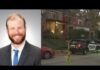
Welch’s letter identified the lawyer as David Michael Levin. In 2016, Levin pleaded guilty after using stolen or obtained credentials to access restricted parts of Florida election websites. He served a short jail sentence tied to misdemeanor charges. Welch said images and video from Minnesota’s August primary show Levin standing with William Mohrman, a senior counsel in the Civil Rights Division, during federal monitoring at polling places.
What we know about the Department of Justice monitoring push
CNN reported that the administration hired Levin earlier this year and sent him to Arizona and Minnesota during the primaries as an election monitor. Levin declined to comment to CNN on his role or any plans for Election Day. CNN also reported that he once called the 2016 breach a “silly political stunt” meant to expose security gaps. The outlet said the Department of Justice aims to expand its monitoring footprint this fall.
Democracy Docket reported that Levin appears to have joined the Civil Rights Division and helped monitor a Minnesota primary. Their report featured photos and details that linked him to the operation. The outlet’s story fueled a broader outcry about the Department of Justice’s vetting process. That reporting has since been amplified by other media and by lawmakers pressing for clarity on hiring standards and oversight chains inside the Civil Rights Division.
Why the vetting fight matters across party lines
Representative Raja Krishnamoorthi asked Attorney General Todd Blanche to explain how the Department of Justice screens the roughly 1,000 monitors it plans to deploy. His letter said the Department has not publicly explained whether it employs Levin, in what role, or how he joined the Minnesota operation. He requested details on background checks, ethics rules, and any role conflicts for monitors with prior election-related offenses.
The Brennan Center has explained that the Department of Justice can only place federal observers under limited conditions, often by court order, while the Department may also send staff to monitor compliance with voting rights laws. The rules can be complex, but the shared goal is fair access and confidence at the polls. That confidence depends not only on legal authority but on the perceived neutrality of the people on site.
The larger trust problem in election oversight
Research from the Council on Foreign Relations shows that monitors do not always prevent wrongdoing, and public faith can still falter when oversight looks biased. Even skilled observers face questions if their backgrounds suggest partisanship or past misconduct. When the referee’s reputation is in doubt, both sides may distrust the call. That is why a clear vetting trail and transparent roles matter before the busy fall elections.
Senator Demands Answers After DOJ Hires Attorney Convicted of Election Interference as Election Monitor https://t.co/taczUZ8Ovp
— Mediaite (@Mediaite) September 29, 2026
The Department of Justice has not issued a public statement in these materials answering the core questions. That silence leaves a vacuum in a tense season, when many Americans already believe powerful insiders play by their own rules. Clear answers on who was hired, why, and under what safeguards could help. Without them, each new headline risks feeding a deeper belief that the system protects itself first and voters last.
Sources:
mediaite.com, welch.senate.gov, yahoo.com, cnn.com, commondreams.org
© dailyanswer.org 2026. All rights reserved.