
(DailyAnswer.org) – Political protest, legislative brinkmanship, and a real-time security emergency collided at the Texas State Capitol, leaving lawmakers, protesters, and citizens grappling with a night that redefined the boundaries of advocacy and public safety.
Story Snapshot
- An active shooter threat forced evacuation of parts of the Texas State Capitol during a heated redistricting standoff.
- Rep. Nicole Collier defied law enforcement orders, remaining inside the chamber as protests supporting her moved outdoors.
- The threat originated from social media, triggering rapid law enforcement response and ongoing investigation.
- Political tensions, procedural tactics, and security protocols intersected in a high-stakes test of democratic resilience.
Evacuation Unfolds Amid Political Turmoil
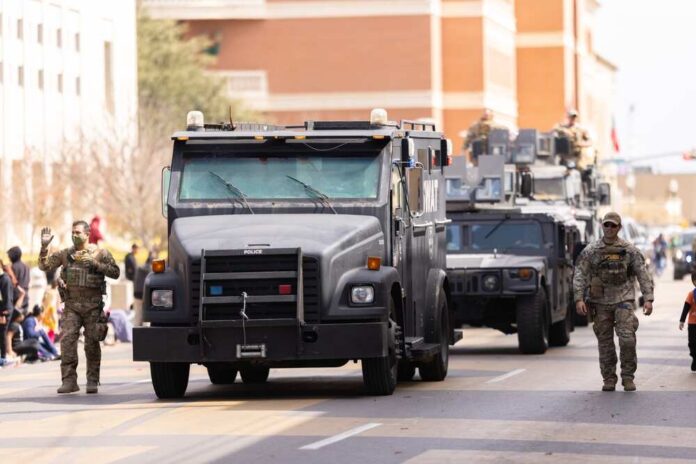
Texas Department of Public Safety ordered the evacuation of the Capitol at 6:30 p.m. on August 19, 2025, after receiving a credible social media threat targeting lawmakers during a contentious redistricting debate. The threat’s timing, coinciding with a protest supporting Rep. Nicole Collier, amplified the gravity of the situation. Collier, at the center of a 30-hour standoff, refused DPS escort and remained in the chamber, waving to supporters from a window as armed guards secured the doors. Protests, previously inside, spilled onto Capitol lawns, their chants echoing the urgency of the moment.
Law enforcement swiftly cordoned off the area, scrutinizing the online post for credibility and origin. Details about the suspect remained undisclosed, fueling speculation and uncertainty among the assembled crowds. Lawmakers and staff, some locked inside, others hastily ushered out, faced an unprecedented disruption of legislative business. The intersection of democratic protest and emergency response created a scene as tense as any in recent political memory.
Redistricting Standoff and Quorum-Breaking Tactics
Rep. Collier’s defiance was the latest act in a long-running battle over Texas redistricting. Democrats, including Collier, broke quorum to block passage of bills they argued would erode fair representation. Civil warrants were issued for absent lawmakers, escalating the standoff and drawing national attention. Collier’s solitary stand inside the chamber became symbolic, a direct challenge to majority rule and the procedural levers Republicans wielded. For supporters, her refusal to yield embodied resistance to legislative overreach; for critics, it threatened the orderly function of government.
The Capitol, normally a place of debate and negotiation, became a fortress, its doors shut to visitors and its grounds a rallying point for protest. The tactical interplay between lawmakers, law enforcement, and activists highlighted deep divisions over not just policy, but the very mechanics of democracy. The evacuation order, prompted by an external threat, inadvertently underscored the internal battles that had long simmered beneath the surface.
Law Enforcement Response and Political Messaging
DPS officials underscored their commitment to safety, stating, “For the safety of those at the Texas State Capitol, and out of an abundance of caution, the Texas Department of Public Safety evacuated the public from the Capitol building around 6:30 this evening.” Armed guards were stationed at the House chamber’s doors, a sign that security concerns had become as urgent as legislative disputes. The investigation into the social media threat continued, with little information released about the source or motive, leaving both lawmakers and the public in suspense.
The House Democratic Caucus issued statements condemning threats and reaffirming the right to peaceful protest. Collier, in public remarks, thanked supporters and emphasized the importance of democratic advocacy. A video from the Texas House Democrats showing a call from former Vice President Kamala Harris further spotlighted the national resonance of the incident. For many, the events of August 19 became a microcosm of the broader struggle between maintaining security and safeguarding constitutional rights.
Impacts and Implications for Texas Governance
The immediate disruption of Capitol operations forced lawmakers to confront the fragility of public access and procedural normalcy. Businesses and tourism near the Capitol faced temporary losses, while the public absorbed the spectacle of government under siege, by both political conflict and external threat. The incident amplified calls for reevaluating security protocols and protest management, raising questions about the future of advocacy in public spaces.
Security professionals and political analysts alike pointed to the need for rapid, credible responses to threats in politically charged environments. Historians drew parallels to previous quorum-breaking standoffs, noting the escalation in both tactics and stakes. Legal experts debated the balance between First Amendment rights and emergency procedures, warning that each new incident sets precedent for both protest and policing. From the perspective of American conservative values, the imperative remains to uphold safety without compromising the foundational freedoms of assembly and speech, an equilibrium increasingly difficult to maintain.
Copyright 2025, DailyAnswer.org