
dailyanswer.org — A woman who once led federal prosecutions in Texas now finds herself on the other side of the courtroom, accused of driving away from a crash caught on camera.
Story Snapshot
- Former United States Attorney Jennifer B. Lowery faces a felony charge in Harris County for allegedly failing to stop and render aid after a Houston crash.
- Local reporting says surveillance video shows the car at the scene for roughly two and a half minutes before leaving.[1]
- The injured driver claims she never checked on him and calls her departure selfish and cowardly.[1]
- The case tests whether the justice system holds its own insiders to the same standards as everyone else.[1][3]
A Former Prosecutor Crosses The Line From Accuser To Accused
Jennifer B. Lowery once stood in court as the top federal prosecutor for the Southern District of Texas, speaking for the United States in serious criminal cases.[3] Now Harris County prosecutors say she is the one who broke the law after a May 14 collision in Houston. According to local reporting, Lowery has been charged with felony failure to stop and render aid, a crime that can carry prison time when a crash causes injury.[1][3] The role reversal alone guarantees public scrutiny.
ABC13 in Houston reports that court documents accuse Lowery of failing to stop and help after a crash that was captured on surveillance video.[1] That video, described but not yet broadly released, allegedly shows a black sedan remaining at the scene for only about two and a half minutes before driving away.[1] Prosecutors now say that short presence on the scene did not satisfy Texas law, which requires drivers to stop, assess injury, and render reasonable aid when someone is hurt.[1][3]
The Collision, The Camera, And The Driver Left Behind
The injured driver, identified as Fonseca, paints a blunt picture of what he says happened after impact. He tells ABC13 that Lowery never checked whether he was dead or alive before leaving, calling her alleged behavior selfish and cowardly.[1] That kind of plainspoken anger resonates with ordinary drivers who assume anyone, let alone a former United States Attorney, would at least walk over and see if the other person is breathing. His account, if jurors believe it, will matter more than her former title.
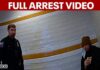
According to reports, investigators used the surveillance footage and other information to identify Lowery’s vehicle and trace it back to her.[1][3] ABC13 states that officers later arrested her at her home and booked her on the felony failure-to-stop-and-render-aid charge.[1] KHOU, another Houston outlet, independently confirms that she now faces that same felony count in Harris County tied to the May 14 crash.[3] That alignment in local news coverage suggests prosecutors have at least a concrete theory of the case, even if the full affidavit is not yet public.
What The Public Knows, What It Does Not, And Why That Gap Matters
The available record so far is thin on the defense side. Reporters refer to “court documents,” but the charging instrument, probable-cause statement, and any officer affidavits are not in the public research set.[1][3] Without those, no one outside the case can evaluate key questions: What exactly does the state say Lowery saw, heard, or said at the scene? How severe were the apparent injuries? Did she make any attempt, even brief, to call for help or speak with the other driver out of the camera’s view?
The surveillance video itself also remains secondhand in this research, summarized in words rather than shown frame by frame.[1][3] That matters. Camera angle, distance, lighting, and what happens just off-screen can turn a narrative of heartless flight into something more nuanced. Common sense and American conservative values both insist on two things at once: personal responsibility when you cause harm, and a fair look at evidence before grading anyone’s character. A partial record leaves both duties only half satisfied.
Status, Outrage, And Equal Justice For Insiders
The headlines push Lowery’s former status to the front: “Former U.S. Attorney charged…”[1][3] That framing reflects public frustration with elites but also risks turning one crash into a referendum on the entire justice system. Many readers will leap to a familiar suspicion: when insiders get in trouble, the system suddenly discovers nuance and patience that ordinary citizens never see. That suspicion is understandable after years of double standards, but it should not replace evidence in this particular case.
The more principled question is simpler: will the law that applies to every hit-and-run suspect apply to a former federal prosecutor without discount? If prosecutors can prove that Lowery knew or reasonably should have known another driver was injured and left without rendering aid, then a conviction would underscore that even insiders must follow the same rules of the road.[1][3] If the evidence is ambiguous, the system owes her the same presumption of innocence that she once insisted on for defendants in her own courtroom.
What This Case Says About Responsibility On The Road
Strip away the titles and this case returns to a basic expectation most Americans still share: when metal hits metal and a human being might be hurt, you stop, you check, and you help. Texas law merely writes that duty into statute. If the local reporting holds up—that the car stayed briefly, no meaningful aid was given, and the injured driver was left to fend for himself—many citizens will see the charge as not only lawful but morally obvious.[1][3] The real test now is whether the courtroom record will match the early headlines.
Sources:
[1] Web – Former U.S. Attorney charged with hit-and-run in crash caught on …
[3] Web – Former U.S. attorney charged in Houston crash | khou.com
© dailyanswer.org 2026. All rights reserved.