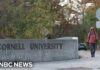
Thousands of fake “ghost students” slipped into Minnesota colleges, raising big questions about who is guarding your tax dollars and your identity.
Story Snapshot
- More than 7,700 suspected ghost-student applications hit Minnesota’s public colleges in one school year.
- Federal officials tie Minnesota cases to about $12.5 million in student aid exposure, but the state system disputes the loss.
- Criminal fraud rings overseas use stolen identities and artificial intelligence to cash out taxpayer-funded aid.
- Most attempts targeted open-door community colleges, forcing new spending on identity checks and fraud tools.
How 7,700 ‘Ghost Students’ Swarmed Minnesota’s Colleges
Reporters in Minnesota discovered that the Minnesota State Colleges and Universities system flagged more than 7,700 suspected ghost-student applications during the 2024–2025 school year.[1] These were “fraudulent or potentially fraudulent” financial-aid applications, not real students trying to earn a degree.[2] Nearly 95 percent hit two-year community colleges, where online classes and open enrollment make it easier for scammers to slip through weak identity checks and trigger aid payments.[2] This is exactly where working families and first-generation students often go.
Federal investigators say criminals build fake or stolen identities, enroll in a few online classes, apply for federal loans and grants, then vanish as soon as money lands in accounts they control.[1] A Minnesota fraud expert told lawmakers that organized rings now try to enroll hundreds or even thousands of ghost students at a time, using automation and artificial intelligence to scale up attacks.[4] This is not a kid cheating the system; it is professional cybercrime aimed at taxpayer-funded programs that were supposed to expand opportunity.
Taxpayer Money at Risk: What We Know and What We Do Not
The United States Department of Education has linked Minnesota ghost students to about $12.5 million in federal loans and grants, part of a larger $90 million problem nationwide.[1][3] In one Minnesota case, a thief allegedly used a stolen identity to grab more than $13,000 in aid, while another case involved over $6,000 in loans taken out in someone else’s name.[2] Those victims may not find out until years later that they “owe” on loans for classes they never took, turning a federal failure into a lifelong personal nightmare.
Minnesota State officials push back hard on the $12.5 million figure, saying the system “never disbursed funds to bogus students” and removed them from the rolls once flagged.[1] They admit at least three campuses had to repay between about $9,500 and $63,000 each to the federal government after ghost students slipped through.[2] But they argue most cases were caught before money moved, and they have not released a full, audited breakdown of how many of the 7,700 cases were real losses, partial payouts, or false alarms.[2]
Why Community Colleges Are Ground Zero for Fraud Rings
Across the country, ghost-student schemes focus on community colleges because they have open-door policies, lots of online classes, and heavy use of federal aid.[2] These schools were built to be accessible, so they often have weaker front-end identity checks than elite universities. Industry research and state reports show that ghost-student fraud has exploded since 2020, with some systems seeing up to 20 percent of applications turn out to be fake. As one analysis noted, attacks are now “organized, automated, and extremely profitable” for criminal rings.[3]
US House approves legislation aimed at stopping student aid fraud committed by ‘ghost students’
"In Minnesota, 1,834 ghost students were found to have received $12.5 million in taxpayer-funded grants and loans," Education Secretary Linda McMahon previously said. pic.twitter.com/GbIJohNFfr
— Alpha News (@AlphaNews) June 12, 2026
In Minnesota, lawmakers heard that many fraudsters operate overseas, are well financed, and use tools like virtual private networks and artificial intelligence-generated homework to look like real students for just long enough to unlock aid.[4] That means this is not only a financial scandal but also a major identity-theft and cybersecurity problem. Every stolen Social Security number or personal record used in these scams belongs to a real American whose credit, tax records, and future can be wrecked while bureaucrats argue over the “true” loss amount.
Accountability, Walz-Era Oversight, and the Path Forward
Before the current administration in Washington, Minnesota under Governor Tim Walz was already under fire for weak controls in several taxpayer-funded programs, including social services and education. Policy groups and watchdogs now connect the ghost-student surge to that same culture of lax oversight, warning that systems were left wide open to global fraud rings while state leaders downplayed the risk. The dispute over whether the loss was “only” a few hundred thousand or as high as $12.5 million does not change the core fact: the door was unlocked, and criminals walked in.
State lawmakers have since approved about $3 million so Minnesota State can install faster, stronger identity verification tools meant to block ghost students before they get aid.[1] Nationally, House Republicans pushed the “No Aid for Ghost Students Act” to tighten federal rules and flag colleges that become fraud hot spots, though that bill still needs action in the Senate.[1][5] For conservatives, the lesson is clear: big systems built on easy federal money and weak ID checks invite abuse. Real reform means strict verification, transparent audits, and real consequences for leaders who let overseas fraud rings treat American taxpayers like an ATM.
Sources:
[1] Web – Minnesota’s Latest Fraud Scandal: 7,700 Ghost Students, $12.5 Million …
[2] Web – Federal bill targets ‘ghost students’ as Minnesota community … – FOX …
[3] Web – Ghost students target Minnesota colleges with thousands of … – KSTP
[4] YouTube – Minnesota flagged over 7,700 bogus students
[5] YouTube – Ghost students target Minnesota colleges with thousands …
© dailyanswer.org 2026. All rights reserved.