
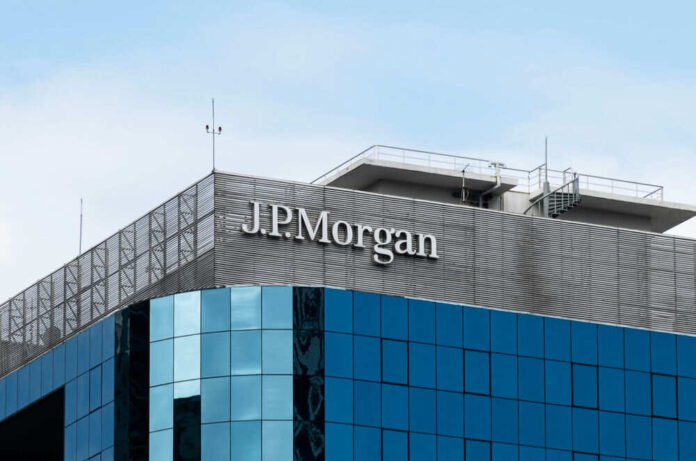
(DailyAnswer.org) – Florida’s top law enforcement official is investigating JPMorgan Chase for allegedly targeting conservative businesses, raising urgent questions about political discrimination and the erosion of constitutional rights.
Story Snapshot
- Florida AG Uthmeier launches investigation into JPMorgan Chase for allegedly de-banking Trump Media & Technology Group (TMTG).
- Bank account closures coincided with TMTG’s public offering, prompting claims of politically motivated financial targeting.
- Investigation centers on alleged coordination between JPMorgan, the Biden DOJ, and federal law enforcement under “Arctic Frost.”
- New Florida laws may set precedent protecting businesses and consumers from wrongful de-banking.
Florida AG Targets Political Bias in Banking
On November 10, 2025, Florida Attorney General James Uthmeier announced a sweeping investigation into JPMorgan Chase, alleging the bank terminated its relationship with Trump Media & Technology Group (TMTG) at a decisive moment, just before TMTG went public. Uthmeier’s office claims this action was not only abrupt but politically motivated, suggesting potential coordination between JPMorgan, the Biden Department of Justice, and Special Counsel Jack Smith. The alleged effort, code-named “Arctic Frost,” has ignited fierce debate over whether federal agencies and major financial institutions are unfairly targeting conservative businesses, undermining core constitutional protections and the principles of fair enterprise.
“De-banking”, the practice of banks severing ties with clients, has become a flashpoint for conservative organizations in recent years. According to recent disclosures, the DOJ subpoenaed JPMorgan for all records related to TMTG as early as March 2023, including pre-incorporation data. This was followed by JPMorgan closing TMTG’s accounts in March 2024, immediately before the company’s public offering. The timing and scope of these actions have drawn scrutiny from lawmakers and industry experts, who see them as potentially pretextual and politically charged. For Florida, the issue resonates deeply: the state has passed legislation designed to protect consumers and businesses from wrongful de-banking, reflecting broader concerns about financial sector overreach and government intrusion into private enterprise.
Key Stakeholders and Power Dynamics
James Uthmeier, Florida’s Attorney General, has positioned himself as a defender of state-based businesses and constitutional values, emphasizing the need to shield local companies from unfair financial discrimination. JPMorgan Chase, one of the nation’s largest banks, stands accused of succumbing to political pressure while maintaining its stance that all actions were in compliance with the law. Trump Media & Technology Group, the operator of Truth Social and a prominent Florida-based entity, claims significant financial harm from the account closures. Meanwhile, federal actors, including the Biden DOJ and Special Counsel Jack Smith, are alleged to have played a direct role in coordinating investigative and enforcement efforts targeting Republican-linked organizations. The Senate Judiciary Committee’s October 2025 release of information about “Arctic Frost” adds weight to claims of a broader, systemic probe into conservative entities.
State versus federal authority lies at the center of this dispute. Uthmeier’s investigation challenges not only the bank’s decision-making but also the boundaries of federal law enforcement’s influence over private sector transactions. The dynamics between banks and clients have become increasingly politicized, with allegations that risk management and compliance protocols are being weaponized against political adversaries. JPMorgan’s executive leadership, as well as federal agencies, now face mounting pressure to disclose the full extent of their coordination and reasoning behind the financial targeting of TMTG and similar organizations.
Latest Developments and Public Statements
Florida’s investigation has moved swiftly, with Uthmeier issuing a litigation hold and demanding document preservation from JPMorgan. Public statements from the Attorney General have been unequivocal: “We will not tolerate it, and we will hold them accountable.” JPMorgan, for its part, has declined to comment on the investigation’s specifics but asserts that it “follows the law in responding to subpoenas from the government and will continue to do so.” Evidence described as “damning” by sources familiar with the case hints at possible legal action and further escalation. The investigation is ongoing, with reviews of potential violations of Florida criminal and civil statutes underway. As the case develops, scrutiny of banking practices toward political entities continues to intensify, with the media and public watching closely for new revelations.
Short-term, the probe has raised awareness of the vulnerability conservative organizations face when navigating financial systems perceived as hostile or politically biased. Longer-term, the outcome may set a precedent for state-level intervention in banking practices tied to federal investigations, especially where allegations of political bias are substantiated. The economic, social, and political impacts are significant: financial harm to TMTG and similar entities, erosion of trust in banking neutrality, and intensification of partisan disputes over law enforcement and financial sector conduct. The broader business community is also on alert, recognizing the potential for increased regulatory oversight and litigation risk in politically charged environments.
Banking experts have noted that while compliance with federal subpoenas is standard, the timing and scope of JPMorgan’s account closures raise important questions about due diligence versus political motivation. Legal analysts stress the complexity of balancing anti-fraud laws, consumer protection, and federal investigative powers. Scholars of financial regulation warn that politicization of banking access undermines trust and stability, threatening the integrity of the financial sector itself. Conservative commentators argue this case exemplifies systemic bias against right-leaning entities, while industry representatives emphasize adherence to law and the importance of non-discrimination. The outcome of the Florida investigation could have far-reaching consequences, both for the protection of constitutional values and for the principle of equal access to essential financial services.
Copyright 2025, DailyAnswer.org