
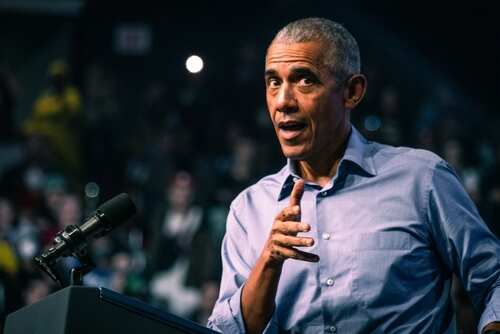
(DailyAnswer.org) – The specter of a “paramilitary force” looms as Obama warns against Trump’s militarization of American cities.
Story Overview
- Obama criticizes Trump’s militarization of police and cities.
- Federal troops deployed without invoking the Insurrection Act.
- Legal challenges question the legality of troop deployments.
- Concerns over erosion of civil liberties and democratic norms.
Obama’s Critique on Militarization
Former President Barack Obama has publicly criticized President Donald Trump’s decision to deploy federalized National Guard and active-duty Marines to cities such as Los Angeles and Washington, D.C. Obama warns that these actions signify a dangerous escalation towards militarization, infringing upon civil liberties and democratic norms. His concern is rooted in the erosion of constitutional principles, particularly the Posse Comitatus Act, which limits military involvement in domestic law enforcement.
Obama’s warnings are not without context. The deployment of troops in response to unrest following ICE raids in Los Angeles underscores a broader trend of militarized law enforcement that has been growing since the 1980s. This trend has intensified under Trump’s administration, raising alarms among civil liberties advocates and legal experts who view the federalization of local policing as a step toward authoritarian governance.
Legal and Political Ramifications
The decision to deploy troops without invoking the Insurrection Act has sparked legal challenges from state and local governments. California Governor Gavin Newsom has opposed federal intervention, citing concerns over state sovereignty and the potential violation of the Posse Comitatus Act. Legal experts argue that the lack of state consent for troop deployments raises constitutional questions, highlighting the tension between federal and state authority.
Trump’s administration justifies these actions under the pretext of maintaining law and order in the face of urban unrest. However, critics argue that this approach undermines democratic norms and sets a troubling precedent for the use of military force in domestic affairs. The legal ambiguity surrounding these deployments is compounded by Trump’s rhetoric, which often frames protestors as threats to national security, further polarizing the political landscape.
Stakeholders and Their Influence
Key stakeholders in this unfolding drama include President Trump, who asserts his authority as commander-in-chief to deploy troops, and former President Obama, who amplifies expert warnings about the erosion of civil liberties. State and local officials, such as California Governor Gavin Newsom and L.A. Mayor Karen Bass, resist federal overreach and advocate for the protection of community rights and state sovereignty.
Influential voices like policing expert Radley Balko and legal scholars provide critical analysis of the implications of militarization. Balko warns that the federalization of police erodes accountability, while legal experts highlight the potential violations of constitutional norms. These perspectives shape public discourse and influence legal and political actions, underscoring the complex power dynamics at play between federal and state entities.
Public Response and Future Implications
Public response to Trump’s militarization tactics has been polarized. While some support federal intervention for public safety, others view it as an overreach that threatens civil liberties. Obama’s statements have galvanized opposition, prompting legal challenges and public protests against the deployment of federal troops in American cities.
President Obama Pushes Fantasyland Idea That Trump Is Building His Own Military Forcehttps://t.co/sl1IJoM9yu
— RedState (@RedState) August 28, 2025
The long-term implications of this situation could be profound. Expanding presidential authority in domestic law enforcement may erode democratic norms and due process protections, creating a chilling effect on protest and dissent. As legal battles continue, the outcome will likely shape the future of federal-state relations and the balance of power in American governance.
Copyright 2025, DailyAnswer.org