
Trump’s new White House press secretary says feminists are twisting a mistrial to score political points — and now her own résumé faces the same kind of scrutiny she handed out.
Quick Take
- Katie Zacharia blamed “toxic feminism” for reaction to the Lindsay Clancy mistrial.
- Reporters quickly began questioning Zacharia’s own legal credentials and online history.
- A University of Nebraska Omaha study finds many young conservative women feel shut out of the feminist label.
- Research on more than 25,000 politicians shows women across the political spectrum face extra scrutiny over looks and family life.
Press Secretary Blames ‘Toxic Feminism’
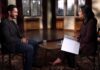
Katie Zacharia took over as President Trump’s White House press secretary this fall. In an August appearance on Real America’s Voice, she said public discussion of the Lindsay Clancy mistrial showed “an almost hyperbolic and almost insane presence of toxic feminism.” She argued that women making those arguments “cannot be taken seriously.”
Zacharia tied her criticism directly to the abortion debate, saying the controversy “started with the advocation of abortion.” Her comments framed the case as proof that progressive commentators treat women differently depending on their politics, a claim that conservative media outlets amplified in the days after her appearance.
Her Own Record Faces the Same Microscope
Zacharia’s first White House briefing drew immediate scrutiny of her background. Reporters raised questions about whether she had ever held a law license, after she had claimed legal experience in past interviews and biographies. No confirmation of that license has been found by reporters checking state bar records.
Coverage of Zacharia also pointed to past social media posts referencing conspiracy theories and anti-abortion claims that fact-checkers have disputed. These stories focused on her record rather than her sex, giving critics a credential-based reason for scrutiny that does not depend on gender at all.
That overlap is the core tension in Zacharia’s own argument. Her supporters say the pile-on proves conservative women get targeted harder than their progressive counterparts. Her critics say the questions about her credentials would exist no matter her politics, since bar licensure and factual accuracy are standard checks for any press secretary.
What the Research Actually Shows
Outside the Zacharia story, academic work on this question is thinner than the political debate suggests. A University of Nebraska Omaha honors study found that modern conservatism is often linked to rejecting feminism, and that conservative women can feel stereotyped as outsiders to the feminist movement. The study relied on a small survey group and did not measure media treatment directly.
Broader media research backs up a different point: gender affects political coverage generally, not just for one ideology. A review of 90 studies covering more than 25,000 politicians and 750,000 news stories found women get more coverage of their appearance, family life, and “feminine” traits than men, regardless of party. The size of that gap changes by country and election system.
A separate analysis of 50 experiments with more than 23,000 participants reached a similar conclusion. Gender effects on how voters judge candidates depend heavily on context. Coverage focused on looks, traits, or family tends to hurt women’s chances more than men’s, but that pattern shows up across the political spectrum, not just among conservative women.
A Debate Without a Scoreboard
No study in the current record directly compares how conservative and progressive women are covered by the same outlets for similar offenses. A commentary in The Spectator Australia argued double standards toward conservative women are “perpetuated by the liberal left media,” but offered no side-by-side data to prove it. That gap leaves Zacharia’s claim as an open question rather than a settled fact, even as her own case becomes the latest test of it.
Sources:
youtube.com, themirror.com, en.wikipedia.org, independent.co.uk, truthout.org, ibtimes.co.uk
© dailyanswer.org 2026. All rights reserved.