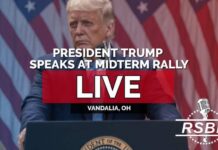

Media claims of “self-enrichment” from White House stock holdings are outpacing the facts and risking another manufactured scandal that distracts from real policy wins.
Story Snapshot
- Disclosures and media segments allege conflicts from White House-linked stock trades, but public records do not prove wrongdoing [5].
- Watchdogs argue executive-branch conflicts recur across administrations when market-exposed assets meet policy power [6][7].
- Prior episodes show how timing around tariffs fueled suspicion, even without evidence of insider information [1][2].
- Trump’s team says outside managers, not the president or family, make investment decisions [5].
What The Filings Actually Show And What They Do Not
Recent ethics disclosures prompted headlines suggesting conflicts of interest tied to White House-adjacent stock holdings. Reporting says the filings revealed significant market exposure that fueled concerns about overlapping policy influence and personal investments, but the disclosures themselves do not establish who directed individual trades or whether policy information was misused [5]. That gap matters. Allegations are serious, yet the public record, as presented, does not identify a specific trade decision ordered by the president or prove an intent to benefit from policy actions [5].
The Trump Organization’s stated position is that assets are handled through outside, discretionary arrangements. That defense asserts third-party managers, not the president or his family, choose securities without client pre-approval. Media reports summarizing that position acknowledge it as a central counterpoint to conflict claims, though commentators continue to scrutinize optics and timing [5]. Without documentation showing direction over particular trades, the distance created by outside management remains a key factual barrier to proving misconduct [5].
Why Conflict Fights Keep Repeating Across Administrations
Ethics analysts describe a structural problem: executive officials can move markets through tariffs, contracts, regulatory actions, and enforcement, while some retain market-exposed assets. That combination repeatedly generates suspicion regardless of party, because intent is hard to observe and documentation is limited [6]. Nonpartisan reform groups have long warned that the executive branch is unusually vulnerable to perceived conflicts when policy levers intersect with personal financial exposure, and they often call for stronger guardrails to protect public trust [6][7].
This recurring pattern fuels political trench warfare. When a president proposes tariffs or signals regulatory shifts, market prices can swing quickly. If officials or their households hold shares, critics question whether timing favored them. Supporters point to legal compliance, disclosure, and third-party management. The result is a cycle: accusations based on optics, followed by denials focused on process. Reform advocates argue the cycle persists because current ethics rules allow too much gray area, leaving the public skeptical even when no violation is shown [6][7].
Lessons From The Tariff-Era Scrutiny And Today’s Claims
Past episodes around tariff announcements illustrate how suspicion grows. Investigations documented how some United States officials sold stocks before markets declined after tariff actions, prompting ethics experts to warn that even trades without insider information can undermine public confidence [1]. Political opponents seized on the timing and demanded inquiries into potential insider trading tied to tariff policy, though confirmation of wrongdoing was not established at the time in the cited accounts [2]. The pattern resembles today’s debate: timing plus policy power equals controversy [1][2].
ELON MUSK COULD BECOME THE WORLD'S FIRST TRILLIONAIRE AS SOON AS NEXT WEEK
The SpaceX IPO is targeting a valuation of $1.8 trillion, per Bloomberg.
It would be the largest IPO in history. But the more striking part is buried in the financial disclosures.
10 senior Trump… pic.twitter.com/wK7Bo5eVua
— IPO Newsroom (@IPONewsroom_) June 3, 2026
For constitutional conservatives, the core principle is equal rules and transparent governance. The standard should be clear, consistent safeguards that prevent actual self-dealing while avoiding trial-by-headline. Reasonable steps include rapid, detailed disclosures, robust recusals when policy directly affects known holdings, and credible third-party control of assets. Watchdog groups advocate tightening rules to remove gray zones, but reforms must respect due process, avoid weaponizing accusations, and protect a president’s ability to govern effectively while maintaining public trust [6][7].
How Readers Should Weigh The Current Coverage
Conservative readers should separate facts from framing. The record summarized here shows media highlighting large or unusual trading activity and arguing conflict risk, yet it does not prove that the president or family directed specific trades or exploited nonpublic information [5]. Prior tariff-era stories teach that optics alone can drive calls for probes, even when evidence remains circumstantial [1][2]. Until investigators produce concrete links between policy decisions and trade direction, allegations remain unproven claims that warrant scrutiny, not conclusions.
Sources:
[1] Web – POISED TO ENRICH WHITE HOUSE OFFICIALS WHO HOLD MILLIONS IN STOCK…
[2] Web – U.S. Officials Sold Stocks Before Trump’s Tariffs Sank the Market
[5] YouTube – Trump stock trades fuel accusations of corruption and profiting off …
[6] Web – Trump discloses stock market investments that fuel concerns about …
[7] Web – Uncovering Conflicts of Interest and Self-Dealing in the Executive …
© dailyanswer.org 2026. All rights reserved.