

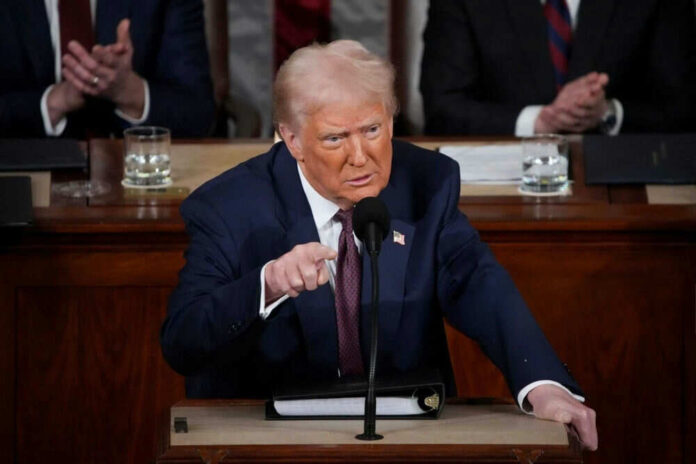
(DailyAnswer.org) – Trump’s insistence on foreign companies to ‘hire and train American’ comes after a massive ICE raid at a Hyundai plant, signaling a sharper focus on immigration compliance.
Story Overview
- Nearly 500 workers, mostly South Korean, were detained at a Hyundai plant in Georgia.
- Trump demands foreign firms in the U.S. to prioritize American workers.
- South Korea negotiates the release of over 300 of its detained nationals.
- Increased scrutiny on labor practices of foreign companies in America.
Trump’s Stance on Immigration and Labor
The ICE raid at the Hyundai battery plant in Georgia on September 4, 2025, resulted in the detention of 475 workers, predominantly South Korean nationals. This prompted President Trump to issue a statement on September 7, emphasizing the need for foreign companies to comply with U.S. immigration laws and to focus on hiring and training American workers. Trump’s stance aligns with his administration’s ongoing efforts to enforce strict immigration policies and promote American labor.
Trump Demands All Foreign Firms 'Hire and Train American' After Hyundai ICE Raid https://t.co/FahES0PfHz
— Mediaite (@Mediaite) September 8, 2025
Trump’s message, disseminated via Truth Social, was not limited to Hyundai but addressed to all foreign firms operating in the U.S. He reiterated the importance of lawful employment practices and the necessity for foreign entities to contribute positively to the American workforce. This call to action is part of a broader narrative to safeguard American jobs and encourage foreign firms to integrate more deeply into the local economic fabric.
Diplomatic Repercussions and Resolutions
The ICE raid also sparked diplomatic negotiations between the U.S. and South Korea. By September 7, just days after the raid, South Korean officials announced that over 300 detained workers would be released and repatriated. These negotiations highlight the delicate balance between enforcing domestic laws and maintaining international relations. The swift diplomatic response underscores the significance of the incident on the bilateral ties between the U.S. and South Korea.
Hyundai, as a significant player in the electric vehicle sector, finds itself under the microscope, with its labor and immigration practices being scrutinized. The incident may compel not only Hyundai but other foreign companies to reassess their compliance strategies to avoid similar situations in the future.
Economic and Social Implications
The raid and Trump’s subsequent statements have broader implications for the U.S. economy and foreign investment climate. In the short term, Hyundai’s operations in Georgia face disruptions, potentially affecting local supply chains and employment. The longer-term impact could lead to a chilling effect on foreign investment, as companies may fear increased regulatory scrutiny and enforcement actions.
Socially, the raid has heightened anxieties within immigrant communities, exacerbating fears of detention and deportation. At the same time, it has amplified political debates around immigration policy and labor rights, fueling discussions on the balance between protecting American jobs and fostering a welcoming environment for skilled foreign labor.
The Future of Foreign Investment in the U.S.
The Hyundai raid and Trump’s demands could reshape the landscape of foreign investment in the U.S. Companies may need to invest more in compliance and local workforce development to align with American labor policies. This shift could lead to increased automation and a reevaluation of labor-intensive operations within the U.S., as firms seek to mitigate risks associated with non-compliance.
Trump Demands All Foreign Firms ‘Hire and Train American’ After Hyundai ICE Raid https://t.co/dYfp2MlR4q
— Tuck The Frumpers (@realTuckFrumper) September 8, 2025
While some argue that Trump’s approach protects American workers, others contend it risks economic harm by deterring global talent and investment. The ongoing dialogue between policymakers, industry leaders, and international partners will be crucial in navigating these challenges and ensuring that the U.S. remains a competitive and attractive destination for foreign businesses.
Copyright 2025, DailyAnswer.org