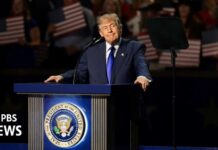

President Trump ordered an “Economic D‑Day” against Iran, unleashing the broadest U.S. sanctions push in years to choke off oil money and weapons networks.
Story Highlights
- The White House restored “maximum pressure,” directing new sanctions and strict enforcement across finance and shipping.
- Treasury targeted Iran’s oil sales, shadow fleet, and weapons procurement networks in multiple waves.
- Analysts and Iranian officials argue pressure will not force talks and may harden Tehran’s stance.
- The big question is whether economic pain will slow Iran’s nuclear and missile advances or only shift its tactics.
What Washington Announced And Why It Matters
The White House issued a national security memo restoring maximum pressure on Iran. The order told the Treasury Secretary to impose maximum economic pressure, enforce existing rules, and warn shipping, insurance, and port firms on sanctions risks. President Trump’s team framed the move as a way to cut oil cash, block illicit trade, and slow Iran’s path toward a nuclear weapon. Officials said the plan seeks to drive Iranian oil exports toward zero and close evasion gaps in finance and logistics.
The Department of the Treasury moved in lockstep. The Office of Foreign Assets Control sanctioned more than 30 people, firms, and vessels tied to illicit petroleum sales and to ballistic missile and advanced weapons production. Additional actions hit 14 actors and aircraft linked to weapons components routed through Iran, Türkiye, and the United Arab Emirates. A separate tranche focused on networks that buy sensitive goods for Iran’s Defense Ministry and armed forces supply chain. Officials say each wave aims to starve key programs of parts and cash.
How Enforcement Targets Iran’s Workarounds
U.S. actions leaned on financial choke points where Iran has long used front companies and covert fleets. Prior moves targeted a “shadow banking” system that moved large sums for sanctioned firms, often through foreign exchange houses and shell companies. The strategy presses shippers, insurers, and ports to deny services to suspect cargoes while banks flag workaround payments. Reuters reported additional sanctions on entities accused of supporting nuclear activity, showing Washington’s focus on procurement and finance nodes.
Officials argue this tightens the noose on oil revenue, which funds state operations and military projects. They also say enforcement can slow nuclear and missile advances by blocking parts purchases and transport links. Treasury leaders claimed “Economic Fury,” the campaign’s banner, is constricting Iran’s global network and imposing a financial “stranglehold” on the regime’s cash streams. Supporters say steady pressure raises costs for every smuggled barrel and every diverted component, forcing Tehran to spend more to get less.
Pushback From Tehran And Skeptics In Washington
Iran’s foreign minister said maximum pressure will not force talks, and he ruled out direct negotiations under threat. Iran’s president and foreign ministry called the measures unfair and illegal, and warned of a “firm” response to harms on its citizens. These claims reflect a long pattern: Tehran rejects unilateral measures and highlights the toll on civilians. For U.S. audiences, the dispute centers on whether pressure leads to real policy change or just public defiance paired with quiet workarounds.
BREAKING: The UAE has suspended financial and economic transactions with Iran, dealing a major blow to one of Tehran's most important trade and financial lifelines.
In context: The move follows weeks of pressure from the Trump administration, which has urged Gulf allies to…
— NewsVector (@NewsVectorHQ) August 20, 2026
Outside experts split on results. The Brookings Institution wrote that sanctions have imposed heavy costs but did not convince Iran to give up nuclear aims or open serious talks. The Atlantic Council said earlier waves damaged Iran’s economy but failed to improve policy and risked worse outcomes. Defense Priorities argued pressure strengthened hardliners and did not yield a “less nuclear” Iran. These views warn that sanctions can constrain money yet still miss the core goal: a durable rollback of risky programs.
What To Watch Next: Pressure Versus Proof
The test is simple: Do sanctions delay Iran’s nuclear and missile timelines and curb attacks by Tehran or its partners? Treasury will point to seizures, network takedowns, and falling revenue as wins. Critics will ask if those wins translate into verified changes on the ground and at nuclear sites. Both sides agree on one fact: Iran built adaptive evasion systems over years. That means this fight is not one strike. It is a long grind that demands strict, smart enforcement every day.
Sources:
nypost.com, home.treasury.gov, whitehouse.gov, state.gov, reuters.com, aljazeera.com, cfr.org, defensepriorities.org
© dailyanswer.org 2026. All rights reserved.