

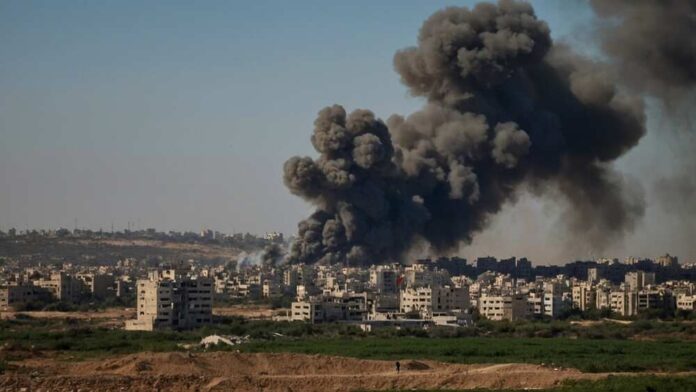
(DailyAnswer.org) – Iranian Missiles Strike US Embassy in Tel Aviv, Raising Fears of American Military Response as Middle East Conflict Escalates
Key Takeaways
- The US Embassy branch in Tel Aviv sustained damage from Iranian missile strikes on June 16, 2025, though no American personnel were injured
- Ambassador Mike Huckabee ordered the embassy closed and issued shelter-in-place orders for approximately 700,000 American citizens in Israel
- The attack was part of Iran’s “Operation True Promise III,” which launched over 350 missiles at Israeli targets
- The incident represents a significant escalation in the Iran-Israel conflict that could potentially draw the United States into direct military confrontation
- Israel’s defense systems intercepted 80-90% of incoming Iranian missiles, but civilian casualties and infrastructure damage continue to mount
US Embassy Damaged in Iranian Attack
The United States Embassy branch in Tel Aviv suffered significant damage on June 16, 2025, when Iranian missiles struck nearby areas during an escalating conflict between Israel and Iran. Concussive forces from the missile strikes shattered windows and caused structural damage to buildings within the embassy compound. Viral social media footage showed broken glass scattered across embassy offices and meeting rooms, with embassy staff seen evacuating to secure locations. While the damage was primarily structural, the attack represents a dangerous escalation that could potentially draw America directly into the regional conflict.
Ambassador Mike Huckabee announced that the embassy and consulate would remain closed following the attack, with shelter-in-place orders still active for personnel. “The safety of American citizens remains our top priority,” Huckabee stated in an emergency briefing. “We are coordinating with Israeli authorities to ensure the security of approximately 700,000 American citizens currently in Israel.” The State Department has urged all Americans in the region to monitor embassy communications closely and prepare for possible evacuation orders if the situation deteriorates further.
Operation True Promise III: Iran’s Massive Assault
The embassy strike occurred during what Iran has dubbed “Operation True Promise III,” a massive retaliatory campaign against Israel involving more than 150 ballistic missiles and 100 attack drones. Israeli defense systems successfully intercepted between 80-90% of the incoming projectiles, but several major cities including Tel Aviv, Haifa, and Beersheba suffered significant damage. The operation marks the third major Iranian assault on Israeli territory in 2025, with each attack growing more intense and sophisticated than the previous.
Iran specifically targeted critical Israeli infrastructure, with energy facilities in Haifa sustaining heavy damage. The cumulative missile count has now exceeded 350 since the conflict’s escalation began in early June. Israeli civilians have paid a heavy price, with 24 deaths reported and hundreds injured. The economic impact has been equally devastating, with oil prices surging and global shipping routes disrupted as vessels avoid the increasingly dangerous waters near the conflict zone.
Israel’s Forceful Response
Israel has responded to Iranian aggression with precision strikes against high-value targets inside Iran. Israeli forces successfully attacked the Islamic Revolutionary Guard Corps (IRGC) Quds Force headquarters in Tehran, eliminating several senior commanders. Additional strikes targeted Iranian nuclear facilities and military leadership compounds throughout the country. Prime Minister Netanyahu has vowed that Israel will continue to defend itself “by any means necessary” and promised that Iran “will pay a heavy price for its aggression.”
“The Iranian regime has crossed every red line imaginable by targeting civilian infrastructure and diplomatic facilities,” said Ambassador Mike Huckabee. “The United States stands firmly with Israel against this unprovoked aggression and will take appropriate measures to protect American interests and personnel in the region.”
Military analysts suggest Israel’s response has been carefully calibrated to degrade Iran’s offensive capabilities while avoiding actions that might trigger an all-out regional war. However, the attack on a U.S. diplomatic facility significantly complicates the situation, potentially forcing American military involvement despite the Biden administration’s reluctance to open another Middle Eastern conflict front during an election year.
International Reactions and Concerns
The United Nations Security Council has convened emergency sessions, issuing repeated calls for de-escalation as the conflict threatens to engulf the entire region. European allies have expressed solidarity with Israel while urging restraint from all parties. Russia and China have predictably blamed Western powers for the escalation, with Moscow calling for immediate ceasefire negotiations without preconditions. Meanwhile, oil markets have responded with extreme volatility, with Brent crude briefly touching $130 per barrel before settling around $125.
The attack on the U.S. Embassy presents a particularly difficult challenge for the Biden administration, which must now weigh a proportional response that deters further Iranian aggression without triggering a wider war. Defense Secretary Lloyd Austin has reportedly presented the President with several military options, ranging from limited strikes on Iranian missile facilities to more comprehensive operations against the Islamic Republic’s military infrastructure.
As tensions continue to mount, the question remains whether diplomatic efforts can prevail or if the Middle East stands on the precipice of its most devastating conflict in decades. With American diplomatic facilities now directly affected, the pressure for U.S. military involvement grows by the hour, potentially drawing the world’s superpowers into a dangerous confrontation with unpredictable consequences.
Copyright 2025, DailyAnswer.org