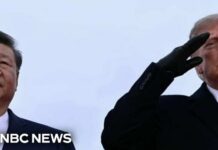

President Trump hosted China’s Xi Jinping for a White House state dinner packed with tech titans, turning protocol into a power signal watched around the world.
Story Highlights
- Trump and First Lady Melania hosted Xi for a formal state dinner in the East Room.
- A rare planeside greeting and a tech-heavy guest list amplified the symbolism.
- Both sides used ceremony to project warmth amid serious policy tensions.
- Seating, menu, and attendees doubled as signals to markets and allies.
What Happened at the White House
President Trump and First Lady Melania Trump welcomed Chinese President Xi Jinping and Peng Liyuan to the White House for a state dinner on September 24, 2026. The East Room event capped a day of official meetings and ceremony. The White House announced the evening plans ahead of time and highlighted the First Lady’s role in preparations. Major outlets described the dinner as lavish and formal, with both leaders delivering toasts before a high-profile audience.
The dinner drew a cast of top technology executives, underscoring how artificial intelligence and chips now sit at the center of the relationship. Reporting noted a guest list heavy with industry leaders alongside political figures and diplomats. Associated Press coverage placed the tech focus in the broader context of summit optics, with cameras tracking arrivals, seating, and the menu as part of the message both governments wanted to send.
Why the Optics Mattered
Protocol choices signaled intent beyond the dining room. Trump’s decision to greet Xi on the tarmac was rare and designed to show respect before tough talks, according to multiple reports that framed the gesture as unusual but deliberate. Analysts and diplomats often read these moves closely because ritual can hint at the tone of private bargaining. Reuters has noted that even seating charts and course selections can carry diplomatic meaning when stakes are high.
Media coverage tracked the “pomp versus substance” balance that comes with state visits between major powers. Outlets described a day of pageantry and careful staging, while also noting that trade, technology, Taiwan, and security issues remained on the table away from the cameras. The blend of warm toasts and firm agendas reflected a shared need to lower friction while protecting core interests. That dual message is common in summitry and was clear here.
Signals to Business, Workers, and Allies
Guest list signals targeted several audiences at once. Markets saw the presence of chip and artificial intelligence leaders as a nod to supply chains and investment. Workers and manufacturers hoped the tone could ease pressure tied to tariffs and export rules. Allies and partners watched for any hint of a shift in strategy or leverage. Reports emphasized how a “tech-forward” crowd matched the issues expected in closed-door talks.
After three days of formal ceremonies in Washington, Xi Jinping has left the United States
A state welcome, military honors, a state dinner, extended talks with Trump, and another formal farewell at Joint Base Andrews.
But behind all the ceremony, trade, technology, Taiwan and…
— China pulse 🇨🇳 (@Eng_china5) September 25, 2026
Leaders used the dinner to project stability despite wide gaps. President Trump praised the relationship and hailed personal ties, while Xi called for responsible action by both nations, according to coverage of their remarks. A state dinner cannot resolve disputes by itself. But it can buy time, calm nerves, and set a stage for concrete steps on trade flows, scientific cooperation, and crisis hotlines. That was the practical value of the evening’s symbolism.
Sources:
youtube.com, abcnews.com, whitehouse.gov, nytimes.com, cbsnews.com, yahoo.com, reuters.com
© dailyanswer.org 2026. All rights reserved.