

(DailyAnswer.org) – Secretary of State Marco Rubio has threatened China with “economic suicide” as tensions escalate following U.S. airstrikes that obliterated Iran’s nuclear facilities and Tehran’s subsequent threat to close the vital Strait of Hormuz.
Key Takeaways
- U.S. airstrikes destroyed Iran’s nuclear facilities in June 2025, prompting Iran to threaten closure of the Strait of Hormuz
- Secretary Rubio warned China that Iran’s potential blockade would devastate Beijing’s economy, with oil prices potentially spiking to $110 per barrel
- The Strait of Hormuz is critical for global oil supply, with 20% of the world’s oil passing through daily
- Rubio, confirmed unanimously as Secretary of State in January 2025, has taken a hardline stance against both Iran and China
- Any Iranian retaliation would trigger a “strong U.S. response,” according to Rubio
Rubio’s Diplomatic Showdown with China Over Iran Crisis
In a dramatic escalation of Middle East tensions, Secretary of State Marco Rubio issued a stark warning to China on June 23, 2025, urging Beijing to pressure Iran against closing the strategic Strait of Hormuz. The diplomatic crisis erupted after U.S. airstrikes using bunker-buster bombs and Tomahawk missiles successfully destroyed Iran’s primary nuclear facilities, prompting Iran’s parliament to endorse blocking the vital waterway through which approximately 20% of the world’s oil flows daily.
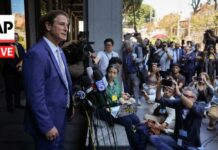
Rubio, addressing reporters at the State Department, characterized any potential closure of the strait as “economic suicide” for China, which heavily depends on oil shipments through the narrow waterway. “The Chinese economy would suffer catastrophic damage if Iran follows through on this threat,” Rubio stated firmly. “Beijing has significant influence over Tehran, and we expect them to use it. This is not just an American concern – this is a global economic threat that China cannot afford to ignore.”
Nuclear Strikes and Escalating Tensions
The current crisis represents the most significant foreign policy challenge for Rubio since his unanimous confirmation as Secretary of State on January 20, 2025. The precision U.S. airstrikes that triggered the standoff reportedly “obliterated” Iran’s nuclear infrastructure, which intelligence sources had indicated was approaching weapons-grade enrichment capability. While the Biden-Harris administration had pursued diplomatic solutions with Iran, the Trump-Vance administration adopted a more aggressive approach to preventing Iranian nuclear capabilities.
Iran’s Supreme National Security Council has yet to finalize the decision to close the strait, but military movements in the region suggest preparations are underway. Energy analysts warn that such a closure could send Brent crude prices soaring to $110 per barrel, creating a global economic shock. The Strait of Hormuz lacks viable alternatives for oil transit, meaning any blockade would cause “considerable supply delays and elevated shipping expenses” worldwide.
America’s Strategic Response
Secretary Rubio’s approach reflects the administration’s “peace through strength” doctrine. While extending an olive branch for diplomatic resolution, he simultaneously issued an unambiguous warning that any Iranian retaliation would provoke a “strong U.S. response.” Military analysts suggest this likely includes contingency plans for reopening the strait by force if necessary, potentially drawing America into a wider regional conflict.
“Secretary Rubio brings a clear-eyed view of America’s adversaries and the threats they pose to our national security and global stability,” said Senator Dave McCormick in his statement supporting Rubio’s nomination. “His leadership at the State Department will restore America’s standing on the world stage and advance our interests with clarity and resolve.”
The Pentagon has reportedly reinforced its naval presence in the region, with additional carrier strike groups moving toward the Persian Gulf. Military experts note that while Iran possesses significant anti-ship missile capabilities and naval mines, U.S. forces maintain overwhelming superiority in the region. The question remains whether Iran’s leadership will risk direct military confrontation with the United States or seek an off-ramp through Chinese or Russian mediation.
Global Economic Implications
The potential closure of the Strait of Hormuz represents a severe threat to global energy security. With China, Japan, and South Korea among the top recipients of oil transiting the strait, Asian economies face particular vulnerability. Energy market analysts warn that even the threat of closure has already triggered market volatility, with oil futures climbing sharply in anticipation of possible supply disruptions.
Rubio’s strategy of pressuring China reflects a sophisticated understanding of Beijing’s economic vulnerabilities. By framing the crisis as a test of China’s influence over Iran, the Secretary has effectively placed responsibility on Chinese leadership to rein in their Middle Eastern ally. This approach aligns with the administration’s broader policy of holding China accountable for its relationships with rogue states while highlighting America’s willingness to take decisive military action when necessary.
As tensions continue to mount, global markets remain on edge. The next 48 hours will likely determine whether diplomatic efforts succeed in averting what could become the most significant disruption to global oil supplies in decades. Secretary Rubio’s handling of this crisis may well define his tenure at the State Department and shape America’s Middle East policy for years to come.
Copyright 2025, DailyAnswer.org